Empowering and Building Better Connections with Rachel Levy
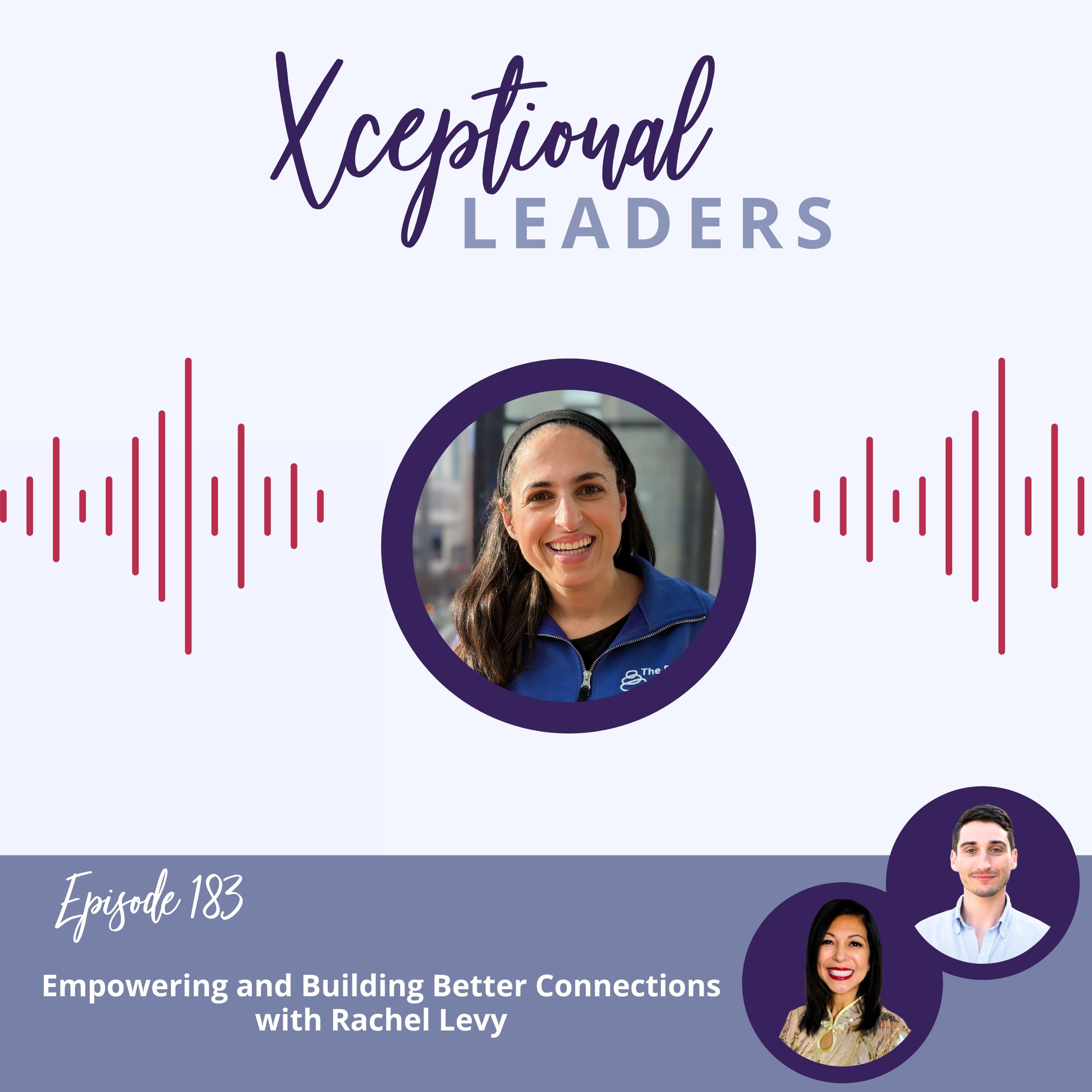


Dr. Rachel Khasky-Levy is our guest for today’s episode of Xceptional Leaders. She is the CEO and co-founder of The Babel Group, and she brings her passion for connecting technology and clinical practice to this conversation with Mai Ling. They discuss the necessity and value of wearing multiple hats in a startup, encourage the listener to go ahead and ask the “dumb” questions, and comment on the fact that sometimes leaders need to blaze a new trail. Don’t miss this informative chat with Dr. Levy!
Contact Mai Ling: MLC at mailingchan.com
Contact James: James at slptransitions.com
James Berges 00:01
If that guy can do it, then so can I. Dr. Rachel Levy watched a colleague at her tech startup launch a side hustle. That thought hit her and it didn't let go. Sleepless nights followed.
Then she pitched her vision. The Babel group was born.
Rachel Levy 00:18
It's a challenge when you're trying to make headway and make change in a place that isn't currently ripe or ready for it because they just don't know that it's possible.
Mai Ling Chan 00:33
Welcome to the Exceptional Leaders Podcast. I'm Mai Ling Chan, and together with James Berges, we're getting you top tips and resources for building and scaling your disability-focused offerings straight from the forefront of disability advocacy and leadership.
Okay, so Rachel went from a clinical SLP for 16 years to customer success at a voice tech startup to founding or co-founding her own consulting firm. I'm so excited and proud of her. She's building the bridge between Allied Health Pros and tech companies. And her clinical expertise, well, it's translating into business impacts in ways that you just wouldn't expect.
James Berges 01:12
Yeah, here's what gets me about Rachel's take. Everyone talks about the SLP shortage, like it's doom and gloom thing, and there are budget cuts and real issues there.
But what I love is that Rachel flips it. What if we're thinking about it wrong? What if opening more career paths like going into tech or using your clinical expertise in unexpected, nonclinical ways attracts more people into the clinical field? It seems counterintuitive, but you tell someone they can work face-to-face with patients and innovate in tech, and I see this all the time. Mai Ling I have my own website that's similar, a bit different, but also helping me with career transitions called slptransitions.com, and it's helping people explore what they can do outside the clinical work because people feel pigeon-held often, and so I love what Rachel's doing here.
Mai Ling Chan 02:00
I love it, and I love the shameless plug when we do that. I'm going to piggyback on that and also say that with my Becoming Exceptional SLP Leader book, that was very eye-opening and people telling me all the time, especially students, that they had no idea that they could do things so exciting and so personal beyond that knee-to-knee direct clinical service.
James and I are here to talk about all of the other things you can do, but Rachel is going to talk about specifically this tech innovation area, and it's just so exciting. In this conversation, you're going to hear why wearing 10 hats at its startup is actually your secret weapon, and I know that for sure, and so does James, all hands on deck, right?
James Berges 02:43
Oh yeah. We're in the middle of a big campaign right now, but you just got to wear all the hats. I love hats.
Mai Ling Chan 02:49
love it. And then you're going to have so much experience, such valuable, priceless experience.
Okay. And the next one is why your dumb questions might be the insights everyone else is missing. And I'll tell you firsthand, I was, I was that person and it turned out to be very valuable. And then what it means to be a unicorn and why you're building roads from scratch.
James Berges 03:08
Yeah, there are no dumb questions, just data points. And Rachel doesn't sugarcoat the business stuff, which other people might see as failure. And really, she says, listen, someone asked her point blank, are you making money? And she didn't dance around it. They're sustaining the business, but they haven't paid themselves yet.
And that's really her commitment to her vision. And that's the real deal when you're building something new. It takes time. It takes belief. And her husband calls her a dreamer, grounded in reality, which I love that.
Mai Ling Chan 03:36
Yeah, me too.
And this is the thing, you know, we're speech language pathologists and other people listening, like you might be an OT or PT or parent, and you're thinking about technology, or maybe you're an entrepreneur building health products, you know, or maybe in the middle of a career shift. And Rachel's story really proves that your expertise, you know, your lived experience, your world knowledge is worth so much more than you think. And you just have to see the opportunity and go for it. And that's what she's providing.
James Berges 04:03
Here's Dr. Rachel Levy, co-founder of the Babbel Group, showing us sometimes the best way forward is building the bridge yourself.
Mai Ling Chan 04:15
I am here today with Dr. Rachel Levy, and I'm really excited because we are working together on a project that is coming up in November at our national association, but we will get to that later.
And I'm so excited because Dr. Levy and I have known each other for many years and they've seen each other's work. And so having her on the show and then also working on a project with her is just incredible. So welcome Dr. Levy.
Rachel Levy 04:36
Thank you, I'm so excited to be here, Mai Ling. I'm also a fan girl and have been listening and following you for a number of years. So it's really exciting to finally be here in the hot seat.
Mai Ling Chan 04:48
Yes, so much going on with what you're working on and so we thought this was a perfect conversation for our listeners who are kind of leaning in on what to do next in the profession. So let's talk about your history a little bit and how you got started with working or creating the Babel group.
Rachel Levy 05:06
Yeah. So I was actually a clinical SLP for about 16 years, worked at schools, private practices, mostly in pediatrics. And then I just was itching for a change and I decided to get my doctorate. I figured the doctorate will somehow springboard me to something different, something new, something exciting. I didn't really know what, but I went ahead and took the plunge.
So I got my doctorate and after my doctorate started my own private practice. But I knew that wasn't really what I wanted to be doing. I just thought, hey, I just want to do something that's independent. That's my own thing. And so I started with that, but I really started to really expand in terms of my networking. And I connected with a mentor who kind of asked me, well, what do you want to be doing? And I kind of told her, well, I'm really interested in tech, really interested in the impact that tech has and very interested in articulation and accents. And she's like, well, do you know about voice it? And I said, no. And she's like, well, I'm very close friends with the founder and you should speak to him and connect. And I said, I'm open to it. And she connected me with Danny Weisberg, who was the then CEO. He's a founder, one of the founders of voice it. We connected and basically that makes history. We then was offered the position of customer success manager started there, started working at voice it and the impact that I was able to achieve in the now three years that I've been there is it's pretty incredible. And just the impact of the technology and the lives that I've seen firsthand be impacted and affected in such a positive way is so inspiring.
Mai Ling Chan 07:00
Excellent. So for our listener, Dr. Rachel Levy is a speech language pathologist, but her path can anyone can do what she's doing, especially those of us who are in the Allied health, are in the health spaces. And so I'm really excited for you to listen in.
One of the things that I noticed is that you are using the words like networking, mentor, and impact very early on. And those are words that we typically don't use as clinicians who are providing one-on-one services. So it's really interesting that, you know, you already had this on your radar, you know, that you kind of wanted to grow and to connect. And so that's definitely one of the first things, you know, we want our audience to lean in on is that there's so much more for you beyond the one-to-one, you know, needs-to-needs providing services.
So you have this amazing experience in this tech career. And so then how did you start moving into the babble group?
Rachel Levy 07:58
That's a great question. And it's really comes down to seeing opportunities and trying to grab at opportunities. So I worked at, as a customer success manager at VoiceIt and as the customer success manager, and you'll know that if you ever work at a startup, so just to give you a little glimpse into what working in a startup is, you'll have a title, but the title will only cover one 10th of the things that you're actually gonna be doing at the startup. So technically I held like 10 titles.
Yes, yes. And so a lot of what I was doing was sales, was business development, was business partnerships, was research, were pilot studies, were white papers, writing white papers. So there was so much that I was doing. And at the time when we started the Babel Group, VoiceIt kind of hit a sort of turning point where they had a reseller who was selling their product who decided that they were no longer going to sell the product. And VoiceIt basically was not in a position to upskill new people, new companies to sell their product because it takes a long time to get a company, a partner up and running to sell a product. You need to educate them, you need to explain how the systems are from the inside. And so one of the employees of VoiceIt, he was a salesperson at VoiceIt, said, well, I have another company and I can sell VoiceIt through that company. And VoiceIt actually said, yes. And he said, well, if that guy can do it, then so can I. And I literally lost many nights of sleep thinking about how to present this to them in a way that they'll accept it. And I said, well, I'd like to not do this alone. And I asked Katie to join me at the time. And I knew Katie for years, basically she was at Project Euphonia doing something similar to VoiceIt. And then she ended up joining VoiceIt. And I said, Katie, do you wanna do this with me? She was like, hell yeah. And I then presented the package to VoiceIt. I said, this is our team, a team of speech pathologists who are going to sell VoiceIt. We would like to, internally Katie and I said, we want this to be something more, not just like a one-trick pony where we're selling one product, but rather a bridge to innovation, a bridge to allow companies to work with consultants, right? Companies who are producing products, to work with consultants to help them develop those products and go to market in the best way possible that will achieve the goals of the company, but also the goals of servicing the people that we know need those products. So that's kind of the long story of the short story.
Mai Ling Chan 11:08
So the best part of the startup world, you know, it's all hands on deck. And so you had experiences in all of these different areas that were out of necessity. And that's incredible because that really strengthened your own personal skills toolbox.
Right. And then the next step is for you to see the gap. And that's where Blue Ocean is. We use these like terms of startups. It's like, wow, you know, there's just so much opportunity there. And then I've been using the word bridge for years. I love that you're using it. That is what makes us unicorns. And so I'm coining this phrase. I want everyone to know May Link started using the word unicorn. But really, Rachel, you are a unicorn because, you know, you saw all of these opportunities and also looking at there's so many people out there, not just speech language pathologists, but so many people who could be these product testers and, you know, fit into these spaces that the companies need.
So I applaud you. This is just incredible, amazing and very courageous. I love that you shared just the transparency of like the sleepless nights. So I always say there's this iceberg underneath, right? Everybody just sees that. Oh, wow. You know, Katie and Rachel started this group and it just took off. Right. But they're not. And you're shaking your head. No. Yeah. I mean,
Rachel Levy 12:22
at all. Yeah, just wanted to comment in the same light and around that same theme of, you know, it's not a unicorn is a mythical creature, right? It's beautiful, but oftentimes, and people just don't believe in their existence, right? And I think that's part of creating something that's so new, that's so different, that's really solving a problem that nobody else is trying to solve necessarily. And so when you're a unicorn, it's kind of lonely, right?
It's a challenge when you're trying to make headway and make change in a place that isn't currently ripe or ready for it, because they just don't know that it's possible. And so with that comes a lot of sweat and tears and sleepless nights, and a lot of self-doubt, honestly, frankly, a lot of self-doubt as you're paving the way in, you know, kind of new roads, you're making new roads in places that roads don't exist, we're heading out to the Wild West, in a sense. And so it's a lot of struggle, both internal and external, to create a business to create a business that didn't currently exist, that it's a concept and very niche that nobody is really trying to do. And so the naysayers will say, well, nobody else is doing this and nobody else is succeeding at it, so why would you? How could you succeed? You're in the wrong business, you're a wasted talent, you could be doing so much more. You could be all the self-doubt and self-talk that can come from external sources and internal sources.
Mai Ling Chan 14:15
Yeah, you're your own worst critic, right?
Rachel Levy 14:17
Definitely.
Mai Ling Chan 14:18
I love that. Okay. Well, this is a great time for my pitch for the exceptional leaders network. That's the same thing that I saw, Rachel, is that we are all doing amazing things and we're doing it in our own silos. And so I created the network so that we could come together and connect specifically in this niche of disability focused product services and support. So I want to thank you.
I know Katie is a part of our group and representing, and hopefully this will help you to find community. And that's another reason why we do this podcast is so that we can listen and learn from each other so that we know that we're not alone on this experience. And oh, wow, they experienced that too. And how did they overcome it? So I really want to thank you for helping me to give back to this community and just help everyone to lift them up. So let me just point out, you have two audiences, and as we mentioned, this is brand new. So the one audience is reaching out to just the infinite products that are being created that could use allied health or medical personnel on their production teams, customer service teams, whatever that is. Then the other side is the individuals who'd be great in those positions who don't know it yet.
So this gets me super excited. How are you juggling both of these new audiences and finding them?
Rachel Levy 15:35
Yeah. So on the tech side, it's not hard, right? All these tech companies, these tech founders are thirsty for support, thirsty for help. They don't have money, but they're thirsty for help and support.
On the flip side, finding individuals who are talented, who have what to give. We actually have a community that meets weekly on Fridays. It's a community that Katie started about a year and a half ago. It's called Clinic to Code. We meet Fridays at noon and we bring on different professionals who speak about their transition from a clinical profession to a nonclinical profession. And they're all allied, allied health professionals there. So everyone who's listening is welcome to join. It's a free community. And we basically pool or create or generate kind of leads from there because we basically just network there. And that's our place to connect with potential consultants who can work with our clients.
Mai Ling Chan 16:37
Love it. And about how many people do you have that are on your mailing list for that group?
Rachel Levy 16:42
I think it's about, at this point, close to 200.
Mai Ling Chan 16:46
Wow. And is it only speech pathology or do you have other professions?
Rachel Levy 16:51
We have all allied health professionals on there. So we even have nurses.
We have educators. We have speech pathologists, occupational therapists, behavior therapists, really all allied health professionals.
Mai Ling Chan 17:04
I love it. If you're like me, you can't get enough of books, podcasts, blogs, and other ways to find out how to create, grow, and scale.
That's why I brought together 43 disability-focused leaders to give you more of what you're looking for. You will hear their stories in three best-selling books, which focus on general offerings, augmentative and alternative communication, and speech-language pathology. I invite you to search for Becoming an Exceptional Leader on Amazon, so you can learn intimate start-up pearls of wisdom and keep growing your brilliant idea. Now let's get back to our amazing interview. What are some of the questions that you keep seeing popping up in those sessions? Like, is there a through line?
Rachel Levy 17:48
A lot of the questions are, how did you make the change? How did you find opportunities? How did you land opportunities? And across the board, I think the themes from the speakers are there's oftentimes a lot of imposter syndrome.
Yes, oh my gosh. Me too. Like imposter syndrome is real and it stops us in our tracks. And that's something that is explored on a constant basis and something, a hurdle to jump over, right? Oftentimes when you want to make a switch to something that's out of your comfort zone. So that's something that's often come up. And really every individual story is unique. But again, it's about making connections, putting yourself out there, and grabbing opportunities. Yes.
Mai Ling Chan 18:51
Okay, so for our listener, I'm going to share a little bit, you can Google myself and Dr. Rachel Levy to see more of our offerings and our history of things.
But just in short, all the things that she's saying are 100% true for me. Someone recommended me to Cognition, which is the Brain Computer Interface product that they're creating for AAC. And my first thought was, oh, there's no way that I could help them, this Brain Computer Interface. I have no idea what that even is. And I jumped in with both feet, which is crazy. And for the first three months, I don't know if you could believe it, but me, Chatty Kathy, did not speak during meetings.
Rachel Levy 19:28
I believe it, I believe it. And it is rough out there when you are so self-critical.
And I think as professionals, I feel like the more educated you get, right? The more you know what you don't know, and then you become even more self-critical. Oh, I don't know that, I shouldn't talk about it. But it should be the flip side. The more educated you are, the more you know what you know, and therefore you can contribute what you already know. Yes.
Mai Ling Chan 20:00
Yes, yes. So I was working with an international team and that's something that many people will need to do because, you know, tech is pretty global. So there was cultural differences and I had to learn, you know, how to navigate that professionally, which is really interesting. You know, certain things that just, we just deal with things differently as Americans, right? So that was really interesting.
And then I started to realize that my questions were not dumb. They were actually exploratory and things that they hadn't considered. And so that is when I started to rise. And I really mean like in the position that I was in, I finally started to realize what my value was, was to poke holes, ask questions, come at it from a totally different perspective because they all were looking at it very unified, you know, one way and they had been doing it that way for a couple of years. And so it just took me some time to get my footing and to feel like a team member. And so I'm just saying this because I haven't talked about this in years. And I just think for this episode, I think it's really valuable for our listener. I want you to connect, I want you to reach out to Dr. Levy and her team at the Bible group if you're interested, but I want you to know, don't be afraid. You know, like, I hope that you can go get past my first three months and jump right in because, you know, that'll put you so much farther ahead. But you are so special and you don't even know that what you know is so valuable.
Rachel Levy 21:20
Exactly, exactly. And I'm very fortunate that when I got to voice it, the team was so thirsty for the knowledge that I had to give that I they were hanging on every word.
And it was like, in hindsight, I didn't realize how fortunate I was, but they were really, especially my clinical expertise, they were really hanging on every word and listening and implementing based on my suggestions. I think it took time for them to understand that I have utility outside of the clinical realm, right? That bring me into your business meetings, bring me into your customer facing meetings, bring me into your partner meetings, like we had a partnership with Intel, which is a big, it's like a big deal to do a pilot, bring me into those meetings, because I can talk on a global level on a business level, not necessarily from a clinical perspective, but from a business perspective.
Mai Ling Chan 22:19
Yep. I also want to add to that.
I never thought that I would get this opportunity, but I was also brought into the pitches. So I was able to be there and sometimes talk for Google, Microsoft, Amazon. I mean, it was incredible and I learned so much and I was able to take that now to what I do with executive consulting. So I'm just going to say, again, for a listener, raise your hand, push yourself in, open those doors for yourself because they don't know, you know, how much you can bring to all different facets of the product creation in the company.
Rachel Levy 22:49
Exactly, exactly.
Mai Ling Chan 22:51
Oh, I could talk to you all day. This is great. Okay.
So, um, I feel like my job as an interviewer on the podcast is to ask the questions that my listeners are thinking about, right? And so here's my question for you. Are you going to make money? I know that there's that beginning, you know, you have to get up and running and we all talk about that, but we're givers, you know, and I've seen so many people who start out and they're just like, you know, I'll do this and I want to help and we always want to help, you know, but I've really been getting on my soapbox of, yeah, you, you want to help, but you have to make money. You have to have money to make money, right? And to be more effective. So that's the big elephant in the room.
Rachel Levy 23:30
Thank you for asking it, really, because that's the question that weighs on my mind every single day, literally, day in, day out, am I going to make money? And while I know that I'm in this profession to help, I do need to make money so that I can continue to help people, and so that the technology can continue to thrive, right? The partners, the clients that I work with, that I distribute for, are counting on me to make sales for them, so that they can continue to thrive and develop their products further. So to answer that question, I can't say no.
I have to say yes, because I have to believe in my mission, and I have to believe that I'm going to achieve my goals, both to help people, but also to create a sustainable business that can help me thrive, my partner thrive, and hopefully many more employees that will take on thrive. I have to say that sometimes my husband calls me a dreamer, and yes, I'm a dreamer, definitely. You cannot do this if you're not a dreamer, okay? I'm a dreamer.
Mai Ling Chan 24:44
and also shaking their head yes right now just so you know.
Rachel Levy 24:48
And even though I'm a dreamer, I am also grounded in reality. And the reality is that we are making money. Luckily, you know, we are making money. The money that we're making is sustaining our business. It has not yet paid us anything, but the fact that it's sustaining our business is something.
And I hope to scale that. And on this year, we plan to go on the road. We have a road show. We're going to be at next week at Closing the Gap. We're going to be at ASHA. We're going to have a booth there. And we're going to have a booth at ATIA. So I think we are going to make some headway and improve and increase our revenues year by year. And that's all that we can do. That's all we can hope for.
Mai Ling Chan 25:34
Excellent. And now we're talking about a whole side of business that we usually don't do as speech language pathologists, which is the accounting side, right? The big five year plan that we're talking about net and net, net, you know, really how much money do you have at the rest, at the end of the day, and how much are you splitting with Katie, right? This is a partnership.
So yeah, and for our listener, we just want to, you know, this podcast is all about being real and being genuine. And this is the beginning stages, um, for the babble group. And you're going to say like, you know, I heard it here first, but I'm really excited. You know, there's nothing to stop you guys from continuing to grow. That's really where you're at.
Rachel Levy 26:09
Thank you. Yes. And that's where we're aiming. That's what we're aiming for. So.
Mai Ling Chan 26:13
Excellent, excellent. Okay, so I'm going to talk about our presentation. So something that is really important for all of the four presenters involved in this is giving back to the community, educating. I mean, we are all constantly presenting. It's amazing. And I am so honored.
I just want to tell you publicly that I was included in that email, you know, would you be interested? And I was like, yes, yes. So, so excited. We submitted and we got approved. The name of the presentation is Beyond the Bedside, exploring nonclinical career pathways for SLPs. It's going to be on Thursday, November 20th at ASHA, 1 o'clock PM Eastern time. Again, it's Dr. Rachel Levy, her partner, Katie Sieber, Dr. Reiki Desai and myself. And the description is explore how SLPs can apply their expertise beyond the clinic into healthcare, tech, education, research, and business through real stories and practical strategies, discover non-traditional career paths, overcome barriers, and shape the future to our field. If you are interested in any way of using your clinical expertise to leverage yourself into some type of creative opportunity in tech, I highly recommend that you come to this or you reach out to one of us. I mean, you don't have to go to it to be able to be connected to us. Wanted to share, Dr. Rachel Levy, do you know more information about us being chosen as a centennial presentation?
Rachel Levy 27:33
So I was just going to mention that. I don't have information on the back end, but I will first say I'm also very honored that you said yes.
Secondly, that we were chosen because our certifying body, the American Speech and Hearing Association, where we're going to be speaking, is celebrating 100 years. And this is the centennial celebration of the existence of that body. And so they have honored a number of talks with a special badge, and that is the centennial honor. And the special badge gets an added search feature when you're looking for a particular talk. And I believe, if I'm not mistaken, they nominated it somewhere around seven, I don't know, 10% of the number of talks they had, something like that. I don't know the back end, but.
Mai Ling Chan 28:32
Submissions are around 4,000. That's like an average.
Rachel Levy 28:35
So I think it was like 700 that they actually gave in the end.
Mai Ling Chan 28:41
Wow, that's amazing.
Rachel Levy 28:43
So it really truly is an honor that we were chosen and I think they were smart for doing it because we are really talking about the future of our profession and where it's going and where it really needs to go and ASHA does need to bring more of that to the professionals.
When I did a search when I was submitting this proposal and I did a search of what is what does ASHA actually put out there in terms of career paths that are outside the clinic they did not include technology in there.
Mai Ling Chan 29:18
Wow!
Rachel Levy 29:18
Yeah. They did include consulting, which is very broad, but it wasn't specific to technology at all.
Mai Ling Chan 29:27
Wow. And then another interesting statistic is we have about 240,000 speech language pathologists in our profession or in the association.
And there's a shortage of SLPs at the master's level in the entire world, you know, when you look at the ratio to the number of people needing services. And so it's interesting that they chose to spotlight us because what are we talking about is moving speech language pathologists out of the very, very needed position of one-to-one service, clinical service, and into, you know, something that is actually out of our profession. So that actually that's interesting.
Rachel Levy 30:05
It's interesting that you mentioned that because I actually think, though it seems counterintuitive for Asha to do this because there's a shortage, I think it's smart because it's actually drawing people to the profession. Because it's saying, come, learn how to work with clients, learn how to help people face to face on the ground. And you don't only have to be doing that. You can also do this. So I think it's a smart move.
You know, maybe it appears to be that they're shooting themselves in the leg. I don't think so. I actually think they're helping. They're helping the profession. They're helping to bring people in, to draw people in to a profession that is cool. It is cool.
Mai Ling Chan 30:50
Excellent. So it also elevates the status of, you know, our profession and our knowledge right. And I'll just again a little pitch. This is where I live, which is the four books that I published becoming exceptional leader series is all about what you can do beyond that one to one clinical service. And so I love that if you're interested, please find our books and and learn from our very, very specific stories.
There's one that is dedicated just to speech language pathology also and one for AC if you're interested. Okay, this has been amazing. Like I said, I could talk to you all day. I'm looking forward to seeing you in person very soon in the next month. And how can we stay in touch with you and follow you and maybe get involved in that weekly meeting.
Rachel Levy 31:34
Sure, yeah, so one, you can email me. My email is rachel at the babble group.com. Babble is spelled B-A-B-E-L.
You can also reach out to me on LinkedIn. My official LinkedIn name is Dr. Rachel Kasky-Levy, and you can also reach out to me on Facebook, where I'm also Dr. Rachel Kasky-Levy. So I look forward to speaking with you all.
Mai Ling Chan 32:00
Thank you so much, and thank you for your vision and your courage, and we're so excited to continue to watch this group just soar. Thank you.
We hope you enjoyed this episode and invite you to leave us a review on Apple Podcasts and Spotify and share the show with people you think will find value from it. This helps the show a lot.
Or have a great guest referral, reach out to us at exleaders at gmail.com.
James Berges 32:25
And if you want exclusive tips on becoming an exceptional leader, deliver straight to your inbox, just go to exceptionalleaders.com and sign up for our mailing list. Thanks for listening.
Co-founder/CEO/Mom
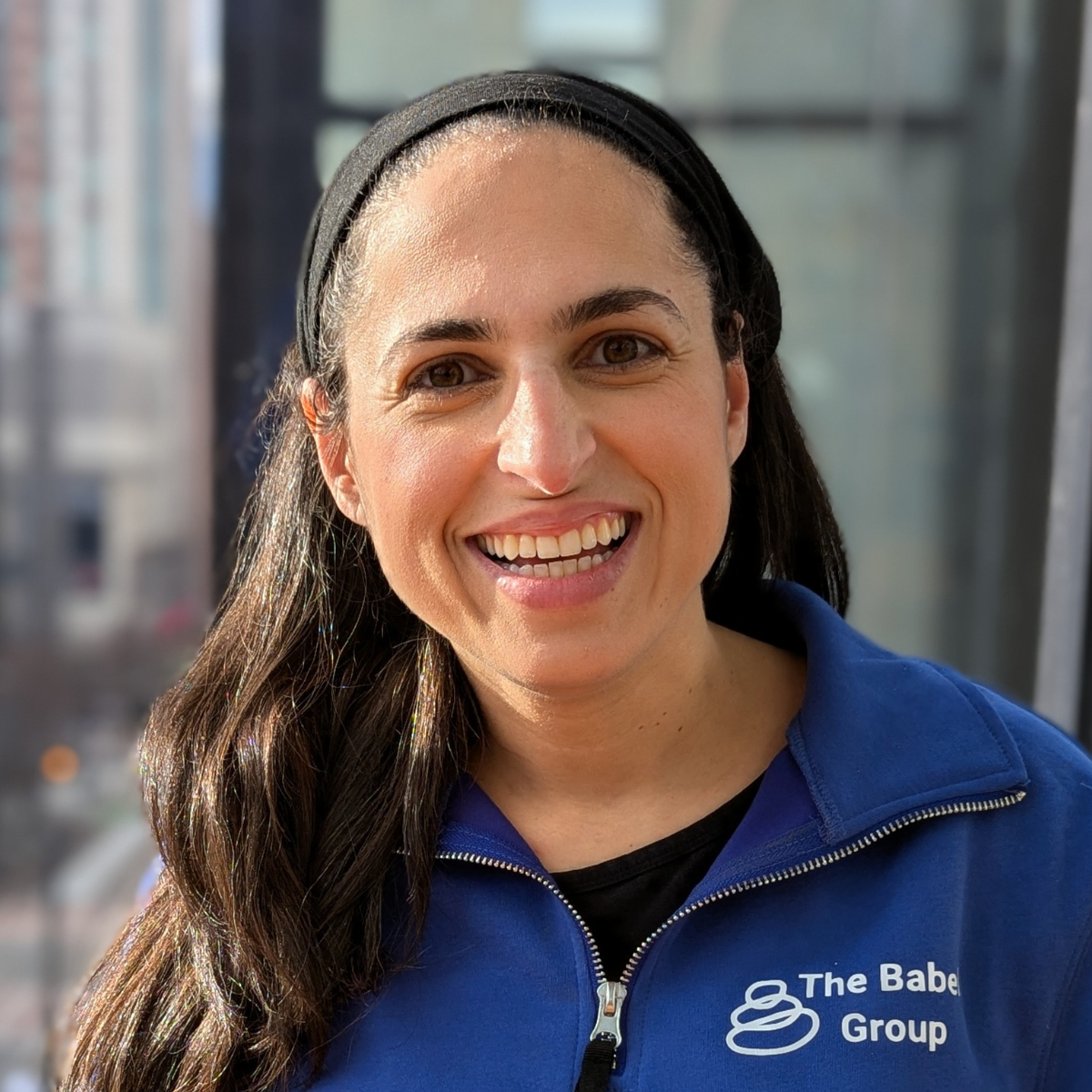
Dr. Rachel Khasky-Levy, SLPD, CCC-SLP, is the CEO and co-founder of The Babel Group. With over 18 years of clinical experience, she brings together deep therapeutic knowledge and a passion for innovation to bridge clinical practice and technology. Her work focuses on empowering therapists with inclusive tools that transform care delivery and expand access to meaningful, person-centered healthcare. She is equally committed to supporting individuals with disabilities by providing communication tools that help them achieve their communication goals and express themselves with confidence.