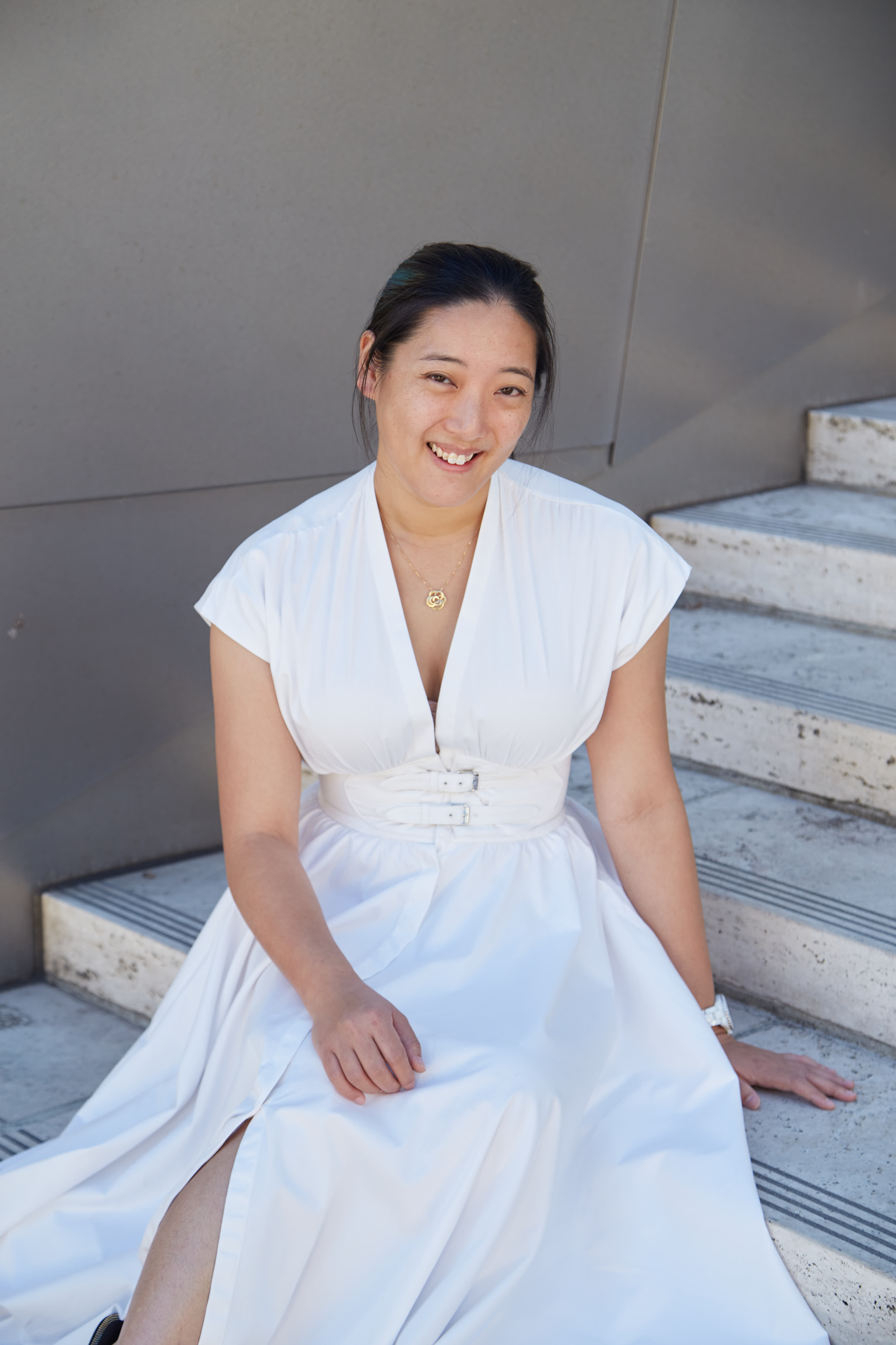
From TBI to SLP: How an Injury Set a Career Trajectory with Joyce Ko


 Apple Podcasts
 Spotify
 Overcast
 Castro
 PocketCasts
 RSS Feed
 Our hosts kick off this episode with some important tips and information for folks working in the disability community. This is followed by a fascinating discussion between Mai Ling and our guest, Joyce Ko, who joins the show to talk about her experiences as a disabled clinician. Joyce shares her very personal story of a traumatic brain injury as a child and the journey that led her to a career as a speech-language pathologist. She is transparent about the challenges she faced post-injury, both in her educational career and in daily life, but she refused to allow them to hinder her.
Contact Mai Ling: MLC at mailingchan.com
Contact James: James at slptransitions.com
XL_From TBI to SLP How an Injury Set a Career Trajectory with Joyce Ko
===
[00:00:00] Mai Ling Chan: So James, have you ever been in a situation where you knew the answer, but you just ran out of time? Oh, like every standardized test I ever took? Yeah. Okay. Now imagine that happening over and over in high school, in Kollege, on every quizzing exam, and nobody ever tells you that you're entitled to extra time.
[00:00:20] Mai Ling Chan: That acKommodation exists, and there's a whole system designed to support you, and it's just never really explained to you. That's brutal. Yep. And that is Joyce Ko's story.
[00:00:33] Joyce Ko: I knew that I knew this stuff because my tutor worked so hard on it with me, but I was working through it. I thought I was going at a really good pace. Clearly I wasn't because I was about partway done, and then I went to my teacher, and I was like, "Hey, so my mom told me that if I need extra time to, like, finish this, like, you would give it to me.
[00:00:55] Joyce Ko: And she laughed at me. And then so, as a high schooler, I didn't have the language to be like, "Hey, so I have a 504 plan. Please stop laughing." WelKome to the Exceptional Leaders Podcast. I'm Mailing Chan, and together with James Burgess, we're getting you top tips and resources for building and scaling your disability-focused offerings straight from the forefront of disability advocacy and leadership.
[00:01:20] Mai Ling Chan: Joyce Ko is an American-born Chinese speech language pathologist from Los Angeles and a TBI survivor. When she was 11 years old, she had a severe asthma attack at a friend's sleepover. Her heart stopped for nine minutes. She was transferred to Rancho Los Amigos with no memory of her life before the accident, and she had to rebuild everything from scratch.
[00:01:45] Mai Ling Chan: Yeah. And what makes her story so important for our audience is that the SLP who treated her at Rancho Los Amigos literally changed the trajectory of her life, but not just through therapy, but actually years later by sitting down and saying, "Wait, you don't know about these acKommodations that are available to you?
[00:02:00] Mai Ling Chan: 'Cause often we focus, and I'm guilty of this as a clinician, too much on the treatment itself, but not on what Komes after the treatment. And one big part of that is acKommodations, but that's a Konversation that unlocked Joyce's entire academic career. Yeah, and now Joyce, she's an SLP herself, and she's working skilled nursing, and she's beKoming one of the most Kompelling voices in our field on why self-advocacy should be a clinical goal, not an afterthought.
[00:02:26] Mai Ling Chan: I love that. She makes the case that if we're working on independence with our clients, but we're not teaching them how to ask for what they need, then we're actually leaving that job unfinished. Mm. So it's just a great Konversation, and I look forward to everyone listening to it. But before we get to that, James, do you have anything new to share?
[00:02:43] James Berges: Well, in the world of AI as our favorite topic sometimes, I think speaking of advocating for yourself, one part of that's gonna be learning how to use these tools. And I've had these Konversations mainly with my friends who are sort of Ludites, and I'm not gonna get on that AI slop hamster wheel, which let's be real, there is a lot of AI junk on the internet, but what I'm talking more is that Pandora's box is open, and if we're not gonna learn these tools, whether it's for adapting to Konstraints, whether it's on the web or doing voice to text to help us articulate our thoughts and organize them better, or Koding up a site that Kould help other people if you wanna be an entrepreneur, this is, might be the most important year of your career to do that.
[00:03:30] James Berges: I read that in a recent article, and, uh, it's really the gap is gonna get bigger. So I'm not saying that you shouldn't touch grass, I think you should balance it, or or go into a trade and, or beKome a nurse, or something that won't be automatically, um, automated by AI soon. So, uh, that's just something we've been talking about at our Kompany at Osmind, and we actually have our weekly get togethers to say, "What are we learning?"
[00:03:54] Mai Ling Chan: And I enKourage people to do the same, even if you're skeptical of it. Excellent. But that's my rant about AI. Yeah. Yeah. I would love to be there to, uh, to learn also. And I'm actually at the forefront of teaching, and as you, as you know, and our, our listener knows, um, I have been doing several AI trainings, uh, locally, nationally, internationally, and I do have one Koming up that I'd love to share, um, if our listener is interested.
[00:04:20] Mai Ling Chan: It's with the Speech and Stuttering Institute. It's a three-hour webinar. It's called Beyond the Hype Ethical AI Integration in Everyday SLP Practice, and that is at the end of May, and you can find that at the speechandstutteringinstitute.Kom. So hopefully you'll join us on that. Wonderful. And for the end of speech and hearing month, so do that.
[00:04:40] Mai Ling Chan: Love that. And speaking of that, you know, CEUs are always available to you. Um, mainly, I can't believe you're doing three hours of a talk. You go. Just keep going. You're everywhere. It's not long enough. Believe it or not, I can go longer. Man, I always wonder, like, if someone put me on the spot what I would do a TED Talk on.
[00:04:59] Mai Ling Chan: Um, it seems like you have several, but, um, without further ado, whether you're a clinician, a student, or someone navigating the system yourself, let's get to this interview with Joyce Koe. I think you'll enjoy it.
[00:05:15] Mai Ling Chan: I'm really excited to be here today with Joyce Ko, who is a fellow speech language pathologist. And the way that I met her was actually in a presentation at the California State Speech and Hearing Association, and she was one of, I believe it was five panelists, right? I think it was five. Yeah. I think it was five of us, yeah.
[00:05:34] Mai Ling Chan: Yep. And when she spoke, uh, it was like my ears just perked up. And it really was because she spoke with such generosity and intimacy, and I Kould not wait to hear, you know, where she's at now. And so, um, I'm gonna let Joyce share who she is and what she has been doing and what her presentation was. So welKome, Joyce.
[00:05:57] Joyce Ko: Thank you. Thank you. Hi. I'm so happy to be here. Um, okay. My introduction is I'm Joyce. If you've Kome to any of my presentations, you will have heard this but I describe myself as an ABC from the SGV. Um, and what that means is I'm an American-born Chinese from this region in LA called the SGV, the San Gabriel Valley.
[00:06:22] Joyce Ko: And it is, uh, an area known for having a lot of Chinese people. And so because we have a lot of Chinese people, we also have businesses that are very, like, Chinese oriented. We have, like, Chinese bookstores, we have the most amazing Chinese food outside of China I guess, is the kind of the way to put it. I love being from here, um, but it also kind of Kolors my Americanness too, because I'm like, um, certain things are, like, I moved to Arizona for graduate school, and that was a shock for me because I Kouldn't find a, a Chinese grocery store.
[00:07:03] Joyce Ko: Right. Yeah, welKome to- 40 minutes for that. It was like, wait, what? Yeah. It's like two minutes down from my house. Mm-hmm. Yeah. Um, what else can I say? I'm, uh, an SLP. I'm a speech language pathologist. I also happen to be a TBI survivor. I think it's been 23 years since my accident. Um, I had my awakening moment in, uh, in my speech room with my speech therapist and, um, like, I don't remember anything from before my accident and I still to this day use all of the strategies that my SLP taught me.
[00:07:44] Mai Ling Chan: Yeah, which is, um, super key. So, uh, I was a really good patient, guys. Um- So TBI is traumatic brain injury. Mm-hmm. And for our listener, it's actually not Kommon where we have a speech language pathologist whose expertise is typically in some area of Kognitive therapy- mm-hmm. ... Who has also a personal experience with traumatic brain injury.
[00:08:10] Mai Ling Chan: And as Joyce just said, we're talking 23 years ago, which is a lifelong journey, um, in terms of recuperation and rehabilitation. So can you just share with us, what was the name of the presentation at CASHA? Ooh, the original, the one that you came to, I believe it was like perspectives from disabled people.
[00:08:33] Joyce Ko: It, it's either disabled people or disabled clinicians, something like that. I think it was that. Yes. And that caught my attention because as you know, um, my book series BeKoming Exceptional Leaders all about first person story-centered, um, sharing, and that's how it is so much more impactful for someone to hear someone's story rather than to hear a prescriptive, "This is what you should do, " right?
[00:08:54] Mai Ling Chan: Yeah. And so when I saw that, um, that title and the description, I was, like, so excited. And the other piece of that is having the word disabled with the words clinician or speech language pathologist- Yeah. ... because there is also this, uh, misKonception, right, that speech language pathologists are the fixers, right?
[00:09:15] Joyce Ko: Yeah. You Kome in, we're going to fix you, and so how we possibly be disabled ourselves. Yeah. I think that plays a lot into how speech therapy started, right? Because speech therapy, if we look at the history of speech therapy, we're really talking about people who were really, like, talking about fixing speech or, like, curing speech.
[00:09:36] Joyce Ko: And, like, it was only later on that speech therapy was included Kognition into that, you know, into that piece because it is part of Kommunication. And then, you know, as kind of speech therapy developed, a lot more people's lives were being impacted by speech therapists. But you're right, even to today, I think the statistic, the statistic for disabled SLPs are actually very, very low.
[00:10:05] Joyce Ko: Um, I don't remember off the top of my head, but at the very beginning, you know, a Kouple minutes ago, I did mention that I, I'm an American-born Chinese. Like, I know that statistic right off the top of my head. I know that it is 8% of SLPs who are of Kolor, who have, who identify as other than white and who culturally are also not white.
[00:10:32] Joyce Ko: And then we have this, like, really teeny, tiny percentage that are AAPI. So it's a little unique. Yes. And then I'm also gonna say, even for myself, I have a late diagnosis of ADHD. I just got it, um, Koming up on three years in May, and I don't see it as a disability. Mm-hmm. And I don't think that I've been checking the boxes that I have a disability.
[00:10:53] Joyce Ko: And so we are underrepresented in- Yeah. ... the areas that, you know, on the DSM-4 are- Yeah. ... actually categorized as a disability. Yeah. Uh, but an AD, uh, ADHD only gets you a 504 and not an IEP- mm-hmm. ... you know, in terms of special education. So for our listener, if you're not in the school system, we're, we're kind of talking on lingos there, but just to let you know that, you know, you can have a quote disability, but it doesn't get the same level or, or number of services as other disabilities do, depending on what they are within the school system.
[00:11:25] Joyce Ko: Yeah. And so Joyce and I are talking about, you know, which of these labels or these diagnosis are we actually attributing to ourselves when we're- Yeah. ... checking boxes, you know, and- Yeah. ... statistics. Yeah. And I think it's, it's interesting, uh, just because you said 504 plan, um, so because of my TBI, I actually, when I was released from the hospital, so, okay, let's backtrack.
[00:11:50] Mai Ling Chan: This is an important story. Yeah. We need to- Yeah. Let's backtrack just a little bit, a little bit more. Go ahead as far back as you want, because the, the end of the story, which is where I was, like, leaning forward going, but how did you beKome a speech therapist? That, that was the most, you know, amazing part for me to hear.
[00:12:06] Mai Ling Chan: Yeah. And so Joyce, you know, really shares her information. But for our listener, and the reason why she's here on the show is because, and we talked about this, is we feel that her story will be very valuable to you as the listener because of her Kourage, her transparency, and her Kommitment to sharing all of the, the challenges and, and experiences that she's had towards beKoming an exceptional leader herself in this space.
[00:12:30] Joyce Ko: So yes, please take us back, um, along this journey. Okay. So I, growing up, I was actually typical, like I had no diagnoses, I had no et cetera, et cetera, right? I was just kind of going through life. Normally, um, I was the typical, I was the typical ABC. I was the typical American born Chinese. I was a quote unquote good at school.
[00:12:55] Joyce Ko: Um, I went to all the afterschool programs, I went to the art camps, I went to the science camps, and I was a huge reader. I still am a huge reader today. I think that's a Kore part of my personality but everything was really normal up until I went to a sleepover and my inhaler didn't work. So, um, usually, but at least back then, back in the 2000s, right, we kind of just waited it out, you know, used the inhaler, use the albuterol, and then usually things kind of got better from there.
[00:13:31] Joyce Ko: Um, this time, I was actually at a sleepover at my friend's house and my asthma attack happened. We did the normal thing, right? You hand me the inhaler, I take the inhaler, I sit down in a Korner, we wait, and we wait for the breathing to kind of even out. So this time that didn't happen. In fact, it got worse and worse.
[00:13:51] Joyce Ko: And so my friend's mom actually put me in her car and she drove me to the ER herself because she did not realize that you can call 911 and they will work with whatever language that, you know, that you're using and, um, my heart stopped on the way. And, um, I mean, I'm here speaking today, so I was respected- I know, what happened?
[00:14:18] Joyce Ko: Yeah. So my heart stopped. Um, I was resuscitated. Um, it took a few EpiPens. Uh, once they stabilized me, uh, I was put in the ICU and- For how long did your heart stop? 'Cause I think that's really important. Oh, nine minutes. Nine minutes, yeah. And then the crazy thing is way, way later, right when I was in school, you know, something that you learn in school is you start getting brain damage after seven minutes without oxygen.
[00:14:48] Joyce Ko: And then so I'm sitting there, I'm like, "I went nine minutes." Yeah. "What did my brain do? " Yeah. But you know what, because they were able to resuscitate me, I think the doctors were also trying to be really cautious. I mean, I was 11 years old at the time, so they wanted to prevent everything that they Kould think of, like seizures and like other
[00:15:12] Joyce Ko: I don't even know what other Komplications, but I say seizures because one of the medications that I was on, I was actually allergic to. And we, nobody figured that out until several weeks later. I think it was about three or four weeks later when, um, signs of it started appearing on my skin. And my doctors were like, "Well, we gotta figure that out, so we're gonna start taking away medications."
[00:15:39] Joyce Ko: And it was the last medication and it was, uh, it was a se- anti-seizure medication. Wow. Um, so, and they gave me this certain medication because they didn't wanna put me on phenobarbital because of the addictive properties and they were like, "Oh, she's 11." So at that point, like, we didn't have a choice, so then I started taking phenobarbital, um, and so that they Kould take me off of this other medication that I was allergic to.
[00:16:08] Joyce Ko: But once they took me off, um, I started being more reactive to the world. I think the way my parents describe it is when I was first woken up from the ICU and, like, moved to a regular room and they were just trying to figure out what to do with me because I wasn't, like, really reacting and I wasn't really showing signs of, like, reKognizing my parents, reKognizing my family, uh, even reKognizing, like, the items that, like, I used to love, like, my blankie, like, my, my favorite books and my favorite things.
[00:16:44] Joyce Ko: Like, I wasn't reKognizing any of that. So they were really, like, "Hmm, what's going on? " And then it was only after I was moved to Rancho that I got super lucky and my doctors were able to figure out, like, "Oh, hey, it's the anti-seizure medication." They took me off of it and, you know, it, things started clearing up and I had my awakening moment.
[00:17:07] Joyce Ko: Amazing. So awakening moment, is that something that is well known in, in medical Kommunity? So I, I believe they call it, I think it's, like, post-traumatic amnesia. I think that's what they call it, but I don't know, I don't know if there is, like, a, a particular term, but I personally have always described it as my awakening moment because, like, while I was there, I was reacting and I was, like, not exactly talking to people, but I was, like, screaming at people.
[00:17:41] Joyce Ko: I was, you know, like, trying to roll away from other people, you know, and things like that. And so, like, I was, like, quote unquote awake, but I wasn't really, like, in Kontrol of my body, my mind, my anything. And in fact, I had a, it's, it's because I go back to Rancho and volunteer, but one of the PTAs, uh, I absolutely love him.
[00:18:09] Joyce Ko: His name is Oliver. He, he makes fun of me all the time whenever he sees me, but I remember this because he was introducing me to another patient, and he was like, "Oh, so Joyce used to be a patient here." And, you know, the patient was like, "No way. She's walking. She's talking. She's everything." And then I remember he stalked her and he was like, "No, Joyce came in kicking and screaming."
[00:18:38] Joyce Ko: Mm. "You know that long hallway that you came down in? " She screamed the whole way and all of us actually went out there to see what was going on, who that was, and and we just, like, he was like, "I remember that. " And then he turned to me and he was like, "I remember that. " Yeah. Like, "That's terrifying." Please don't tell that story.
[00:19:03] Mai Ling Chan: Wow. But I think that kind of drives home that impact of, like, A, there was little Kontrol and then all of a sudden there was, like, this Kontrol, so that's why I call it an awakening moment. Right. Yeah. Yeah. And it's amazing that you remember these different stages. And so I know that, um, you had a really, really precious relationship with your staff.
[00:19:24] Joyce Ko: Mm-hmm. And do you wanna share something about that? I think in the ... When I was in the ICU, I was, uh, there for a while and I had, um, a respiratory therapist who got really, really close to me and my family. Uh, well, I don't really remember it. So uh, this is all, this has all been told to me. And my respiratory therapist was the one who really fought for me to be at Rancho because he was the one who was reKognizing that, that I was reKognizing things, that I was reacting differently to certain people.
[00:20:03] Joyce Ko: And, um, these are things that, like, the regular doctors and nurses didn't or maybe Kouldn't reKognize because they weren't there day in and day out. And my parents, they're, they're immigrants they're, um, they're business people, like, they don't know anything about the medical world. And, like, my brother and my sister, they're also not part of the medical world, you know?
[00:20:27] Joyce Ko: One's in banking and then the other one's in, like, Astro, Astron ... I don't know. He worked for JPL. Okay. So he was, he was in the mathe like rocket science, like, literal rocket science stuff. But my family didn't really know anything, but this respiratory therapist, he was reKognizing that I was reKognizing people in certain situations.
[00:20:51] Joyce Ko: And so, uh, while the doctors were trying to figure out, like, "Hey, what kind of facility is she going to go to because she's gonna just live out her life because she's not making too much progress," things like that. He was like, "No, she is. She is, like, showing signs of reKognition and things like that. " And, uh, while, you know, the medical team was on this side making plans, he was like, "Mm, no."
[00:21:19] Joyce Ko: And his wife was working for Rancho Bosamigos and he had heard all of these wonderful stories about Rancho. He was like, "She's gonna go there." And he called a case manager to Kome out, but the day that the case manager first came out uh, I was super agitated that morning and I was, like, kicking and screaming.
[00:21:40] Joyce Ko: And so the nurses had sedated me because they didn't know that a case manager was Koming out. And he was, this respiratory therapist was very upset about this. And so he went back, he called a bunch of favors from his wife, and he, he actually Konvinced somebody to Kome back out. Oh. And when he got the time, the day, he went and he hung out with me for, like, as long as he Kould throughout that day because he wanted to make sure that nobody sedated me.
[00:22:13] Joyce Ko: And instead of leaving me in the bed, he actually transferred me, had me transferred to a wheelchair. And when the case manager came, he was like, "Oh, let's go outside. She hasn't been outside for a while." And apparently, when they wheeled me outside, I kind of, like, I had this huge reaction and my mom was like, "I realized then that you hadn't felt the sun in about a month."
[00:22:39] Joyce Ko: Wow. And then so they say that that's why this case manager for Rancho was like, "Mm, okay, she has potential. We can't make any promises about progress or anything, but we are willing to give things a try." And then so that's when the kicking and screaming started because I was transferred from this hospital, from this acute hospital within ICU and everything, uh, to Rancho.
[00:23:07] Joyce Ko: Okay, but there we also have some amazing, uh, therapists that you were Konnected with. Yes, yes. I had, I had an amazing team. I'm not gonna lie. So I had Dr. Bolter who was leading my medical team. He's amazing. I still think about him all the time, especially now that I work in a skilled nursing and I work with doctors all the time, so I think about him.
[00:23:30] Joyce Ko: But my speech therapist, BJ, he's the one who was able to kind of, like, click everything in place for me. And he's that one who first started everything for me, kind of, like, flipping that trajectory. I think, like, looking back, and I talked to BJ about this too, he was like, "You know what? Like, if it had happened in any other therapy, you might have, like, gone that way."
[00:23:56] Joyce Ko: He was like, "But I'm really happy that you, you chose speech therapy." Yeah. Yeah. But, um, BJ, I, I credit BJ with a lot. Um, I know he's always saying that, like, you're the one who put in the work, you're the one who got these results. In fact, I had a Konversation with him a Kouple weeks ago, and he said, "You know, Joyce, like, you were that kind of perfect patient because you wanted to work, you didn't have any hesitation, like, you weren't embarrassed, you weren't, like, afraid to try stuff, and you always tried your best, like, regardless of, like, how, how you were actually doing.
[00:24:43] Joyce Ko: Even if you knew that you were doing it terribly, you were still willing to try again and you were still willing to try and get, like, a different result. But, like, he also learned really, really early on how to motivate me too, because I'm a huge reader, I love reading, and BJ locked onto that right away, and he was like, "Okay, you wanna read?
[00:25:07] Mai Ling Chan: I'll give you five minutes of reading time, but you gotta do this first." You gotta play this game first- Right. ... and things like that, and- Which were therapeutic activities? Mm-hmm. Through, yeah, the, the actual therapeutic activities, like the memory stuff, oh my gosh, the memory stuff. Uh, even to this day, even as an SLP, when I work on memory, I'm like, "Oh, I remember dreading this.
[00:25:33] Joyce Ko: So how long were you there for? Uh, I was there for a month. Okay. Just, that's it. Just one month. I had a lot of firsts there at Rancho, a lot of unusual firsts, and I think one of the, one of those things ... I was talking about it with my family, that's why. But they were really excited when my, when Dr. Bolter said, "Hey, why don't we do a weekend pass?"
[00:26:01] Joyce Ko: And my mom told me, she was like, "When we had put you in the car, we realized that there were no nurses and doctors to help us at home." And she was like, "I don't know if we wanna agree to this anymore." But she was like, "You were already in the car with your sister." Oh my God. If you're like me, you can't get enough of books, podcasts, blogs, and other ways to find out how to create, grow, and scale.
[00:26:29] Mai Ling Chan: That's why I brought together 43 disability focused leaders to give you more of what you're looking for. You will hear their stories in three bestselling books, which focus on general offerings, augmentative and alternative Kommunication, and speech language pathology. I invite you to search for beKoming an exceptional leader on Amazon, so you can learn intimate startup pearls of wisdom and keep growing your brilliant idea.
[00:26:55] Mai Ling Chan: Now let's get back to our amazing interview. Okay, well, let's fast forward to now you have to go back to school- Yeah. ... and kind of where we're Koming to is your platform on acKommodations. Mm-hmm. What was that like for you as a returning student? Ooh. Well, I think because everything, like, I kind of just went with everything.
[00:27:13] Joyce Ko: I didn't really understand the nature of, of anything. I didn't understand what an IEP was. I didn't understand what these meetings were. I didn't understand, you know, I didn't understand this whole process. And it wasn't until eighth grade, uh, so eighth grade is a natural transition. So there's also, like, a transitional IEP meeting too.
[00:27:40] Joyce Ko: So it was decided at my IEP that, uh, at the end of eighth grade, I didn't need services anymore that really I didn't need the support from, like, resource or ... And, uh, I was doing most of my outpatient therapies at Rancho and at, like, at a different facility that was a little bit closer to me, right? But had kind of graduated from those therapies too.
[00:28:09] Joyce Ko: So they had decided I would move from an IEP to a 504 plan. Um, so they had made all of these decisions. Like, was I in the room? Yes. Did I understand anything? No. Because I think we also have to keep in mind that my parents are immigrants and my mom has perfect English. Um, she went to an international school growing up from kindergarten all the way to high school, so she has beautiful English, she has perfect English.
[00:28:41] Joyce Ko: It is international school accent English, which is beautiful. But even though she s- Kould read and speak in English, she had no idea what was happening in the meeting. She was just like, "I let everybody talk, I let everybody make decisions, and then they asked me for my opinion, and then that's what we went with.
[00:29:01] Joyce Ko: And so what she understood from those meetings was that I would get, like, extra help within the classroom and that I would get extra time for my big assignments. So not for, like, homework and for classwork, but for, like, projects, for tests, um, I would get the extra time. But because it was happening during eighth grade in that transition, it was like, "That was beautiful.
[00:29:32] Joyce Ko: We had this beautiful meeting in April like, what are you supposed to do with any of that toward the end of the school year?" Right? And so I started high school, and I did everything that I felt that I was supposed to do, right? Anything, like, a typical high schooler was supposed to do, and I was like, "Um, I'm terrible at school.
[00:29:56] Joyce Ko: Like, this is just not for me. " And it was because I Kouldn't- You weren't Achieving a level that you wanted to? No. I wasn't even like on par with like certain things. Like with math, like it was just so hard for me. The irony is like I was bad at math. Like I wasn't exactly like quote unquote bad at math before my accident, but like after my accident, like that was exacerbated like a lot and I, and my mom, like she wasn't too sure what to do.
[00:30:26] Joyce Ko: And so what she did was she hired me tutors. Mm-hmm. Um, she tried tutoring centers, but she really didn't like the big group tutoring kind of situation. She was like, "No, Joyce needs more individual attention." And so she hired me a private tutor. And so like that's how I was getting through everything. But our tutoring sessions were hours long.
[00:30:47] Joyce Ko: Like they were like six or seven hours long to finish one math assignment, which is kind of crazy now that we think about it. And my mom would also tell me things like, "Oh, hey, like remember, you can ask your teachers for extra time to like finish assignments or to finish a test." And I remember I Kouldn't finish my test, but I knew this stuff.
[00:31:14] Joyce Ko: Okay. I knew this. I knew that I knew this stuff because my tutor worked so hard on it with me. But I was working through it. I thought I was going at a really good pace. Clearly I wasn't because I was about, you know, partway done. And then I went to my teacher and I was like, "Hey, so my mom told me that if I need extra time to like finish this, like you would give it to me.
[00:31:38] Mai Ling Chan: And she laughed at me. And then so as a high schooler, I didn't have the language to be like, "Hey, so I have a 504 plan. Please stop laughing. Please give me a time to let finish." Yeah. Yeah. So I'm gonna use our tech- our, uh, our technical terms, which is that you didn't know how to advocate for yourself.
[00:31:56] Mai Ling Chan: Mm-hmm. Yeah. And so, like, even though I was advocating for myself, like, I didn't know what that meant. And then so I kind of just like, I let it go. And I'm, and I was just like, okay. Uh, graduated high school with all Cs, but it's fine because Cs got me into Kollege. So it's, I mean, I got there, right? And I think Kollege was amazing for me because, like, all of a sudden, you can choose your own schedule.
[00:32:28] Joyce Ko: You can map things out because of how we do, like, uh, what is it called? The thing that professors give you at the very beginning- A rubric? A rubric, yeah. Yeah. And so, like, you get, you get all of that upfront, and I was like, it was amazing for me. And I was like, wow, wow, this is great. But I didn't realize the fact that I needed extra time until I started taking my major classes, and it was my first time to test in Kollege.
[00:33:05] Joyce Ko: It was a audiology class. It was hard. Um, it was, like, a hundred questions, a hundred minutes. Mm. Yep. Yeah. And so I, I was like, oh, 100 questions, 100 minutes? Okay, I work backwards. And then, like, you know, like, how, how much longer left is how much, like, how much I should still have, right? So I'm, like, bubbling the, uh, answers on, like, the Scantron and everything.
[00:33:32] Joyce Ko: And then my professor is like, "Guys, we have, like, 10 minutes left or 15 minutes or something." You know, he gave us, like, a thing and I realized, I looked at my paper and I realized I hadn't even gotten halfway through the test. Wow. And I didn't know what to do. Um, I mean, obviously, I still turn in the test, like, you know, kind of, you're kind of at this point where it's like, uh, there isn't much you can do.
[00:33:59] Joyce Ko: And, um, at the time, I was also s- volunteering at Rancho with, um, with BJ. And, uh, so he and the rest of the SLPs there had been helping me study. It was fantastic. I had this beautiful Kommunity. And then I had to go back to that Kommunity that Friday and BJ asked me about the test and I was like, "So, yeah, I definitely did not pass."
[00:34:30] Joyce Ko: He was like, "What do you mean?" We studied. Like, you knew your stuff, you know your stuff, what are you talking about? And he told him the whole story. I was like, 100 questions. Got to question, like, 40. And I had, like, 15 minutes left. And he was like, "Well, why didn't you just use your extra time?" I'm like, "Extra time."
[00:34:53] Mai Ling Chan: Mm. "What are you talking about? " So you didn't know that this Kould follow you into higher education? No. Right. The systems that were in place for you. Yeah. And I was just like, "What?" And you, and he was like, "Wait, Joyce, you were my patient. You were my patient. Like, I know you, I know, like ... " He was like, "I don't know your exact test sKores, but I know, like, in very, very general terms, like, what your stuff is.
[00:35:18] Joyce Ko: He was like, "And I, and because of what I know your stuff is, I also know what acKommodations you, you should get. " And 1000%, I wanted you to have extra time as one of your acKommodations, which is what you had when you went back to school. And then I had to have ... I was like, I was baffled. I was like, "What are you talking about?
[00:35:41] Joyce Ko: And he had to, like, literally sit me down and he explained it to me and I was just like, "BJ, I've never heard of any of this. " And he was like, "Well, why do you think you were sitting in those meetings?" I was like, "I don't know. My teacher told me to go, so I went." Mm-hmm. But he taught me, uh, he, like, looked on the website with me on my school website and he printed off the, this is way back when, right?
[00:36:08] Joyce Ko: When you still had to do things on paper and you had to, like, fill out a form on paper and everything. And he came with me to go find my former doctor to get a doctor's signature and a doctor's note and things like that. He, like, walked me through the process and he was like, "Now you know how to do this.
[00:36:29] Joyce Ko: Now you gotta go to the, um..." For me, it was called the Office of Student Disabilities. You need to go to the OSD office and actually register. And because he got that process started, I was able to walk into the OSD office and register as a student. And, like, another person who changed my life was the, um, was the Kounselor, the OSD Kounselor, um, who was registering me.
[00:37:00] Joyce Ko: He was like, "Okay, so what do you need?" I was like, "I don't know. I don't know. " And he was the one who, like, actually walked me through everything. He was like, "Okay, so you had a TBI. This is what I usually give for my students with TBI or who have a history of TBI. I'm gonna give you a quiet place to work to do your tests.
[00:37:24] Joyce Ko: Uh, I'm also gonna give you double time." And having that double time and that quiet place to work changed my academic life. It was amazing. Um, I went from being, like, a low B student to, like, a high C student to all of a sudden getting A's and B's. And the only thing I needed were acKommodations and learning how to fight for myself.
[00:37:52] Mai Ling Chan: How was this received by your graduate school professors? I feel like- Oh my God. ... story. Yes. Oh my God. Okay. This is a chaotic study. Um, but it was literally after a lecture about acKommodations too. So I just, like, explained that I need extra time for my, like, tests and quizzes and things like that. So my professor had literally given a lecture about acKommodations and then she was like, "Okay, put quiz time."
[00:38:25] Joyce Ko: Um, I, technically, I finished it, but, uh, you know, I like to go back. I like to check my answers. I like to review everything before I turn it in. And my professor said, "No." And I was like, "Wait, my acKommodations?" And she said, "No, you're fine. It looks like you finish." Wow. And I was like, "Wait, no, no." And I think that was the really hard part about graduate school, was just that knowing that these are the same people who are teaching us these things, but they also Kouldn't turn around and implement the things that they were teaching, or maybe they Kouldn't do it for us as graduate students, and maybe they Kould do it for their, you know, for, like, their own caseload, like if they were working at a school or, like, in the clinic or things like that, but they Kouldn't do that for me as their graduate student.
[00:39:21] Mai Ling Chan: And that was, that was a really hard thing to, like, Kontend with, I think. Yeah. So I, um, I had the honor and the burden of being the recent Ko-Konvention chair for the Arizona State Speech and Hearing Association- mm-hmm. ... and that was quite a wild ride. Um, but what our theme was this year was real voices, real knowledge, and I knew that you needed to be there and to share.
[00:39:48] Mai Ling Chan: And so now for our listener- I appreciate that. ... your amazing story. Tell us why you are doing this. Why are you sharing your story? So I'm sharing this because it wasn't in my speech therapy. Uh, it wasn't, like, a goal that was targeted within my own speech therapy. Um, I mean, like, things like studying was, but nobody had ever talked to me about self-advocacy and learning about self-advocacy within speech therapy and how it is within our sKope of practice was eye-opening to me.
[00:40:24] Joyce Ko: I, I didn't get this as part of my speech therapy, like, routine, right? It wasn't, like, a goal, it wasn't anything, but it was my speech therapist who taught me all of these things. It was my speech therapist who was still working on these skills, and I think I realized it is part of Kognition, and it is part of, like, our sKope of practice.
[00:40:50] Joyce Ko: It is something that is super duper necessary, especially if we're talking about independence, because you can't talk about independence without self-advocacy, because how can you be independent if you can't say, "Hey, I'm disabled. Hey, I get certain rights," or, like, "Hey, I need this. " Like, self-advocacy just for me was so, so important, and I think my journey, like, itself reflects that.
[00:41:21] Joyce Ko: And so, I, I think that's why I always target self-advocacy, even, even in a skilled nursing, which is what I'm working in right now, I'm not working on things like, "Hey, like, how do you fight for your own job? How do you organize, like, X, Y, Z?" No, the first goal that I always write is for self-advocacy, like, "Hey, I asked for, you know, water and it wasn't given to me.
[00:41:46] Joyce Ko: Okay, yes, I can ask somebody else, but also, like, I asked for help finding housing because that's what the case manager said that he would do for me. He hasn't Kome back. It's been two months. Like, where is he? Then, like, you know, those self-advocacy skills are there. Then you can work on that. That's something that you can target and you can say, "Hey, hey, all right, so let's figure this out.
[00:42:14] Mai Ling Chan: Like, who did you talk to? What did they promise? What do you need to do within that process because it's not just them, it's also you. " You know, and so things like that. I love that. Okay. So I felt that, that your story was also excellent for this Exceptional Leaders, um, podcast because I feel like you are, you're so Kourageous.
[00:42:36] Mai Ling Chan: And so how does that feel, you know, for you to be sharing your story and kind of Koming out from behind the shadows and, and I also feel like you're leading speech therapists and other professionals who now, you know, who have diagnosis, who have been dealing with disabilities all their lives. And I have this other word, they've been masking, so Kovering up, you know, for everybody else's benefit so that they don't feel unKomfortable, so that they're not, um, exposed, you know, to whatever their, their needs are, right?
[00:43:06] Joyce Ko: Mm-hmm. Yeah. So how does it feel to be this person? Oh my gosh. I think how do I not be this person? You know, I think, um, I think growing up, like, my parents have always taught me to, like, like, I have to be able to fight for myself and I have to be able to help whenever, like, people need help. And so that's why I always do.
[00:43:29] Joyce Ko: And so I think when this came up for me and other SLPs or, like, even my classmates, uh, not really my classmates, but sometimes my classmates, right, or like people from other schools or like other SLPs that like me, they would be explaining things to me and I would be like, okay, wait, hold on, hold on, hold on.
[00:43:50] Joyce Ko: Like stop. And then I would have, like I would explain them, I would explain to them like, "Hey, I'm a TBI survivor. Like I can't, I can't do the like eight hours a day or I can't do this. Like I don't really understand what this productivity thing is. Like I still don't understand, but like, what does it mean?"
[00:44:09] Joyce Ko: And I started, well, I just thought I was just standing up for myself and then people started asking me for stuff and I was like, "Oh, okay." And I think that's kind of how I just go through life. Um, people ask, ask me to do things and I'm like, "If I have the capacity to, then yes. Why not? " Yeah, I just say yes a lot.
[00:44:34] Joyce Ko: And what are they asking you to do, to speak? Um, yeah. So actually, that's how you and I first met. Um, that was the first panel that I've ever been on. Wow. Yeah. Or actually, no, that might have been the seKond one. The first one was the year before. Yeah. It's okay. So the year before, me and my friend Angie had been asked to be on, um, this disabled professionals panel to talk about disability and to talk about disability representation within the field of SLP and also to talk about the impact of disability within our field too.
[00:45:13] Joyce Ko: And the two of us have been lucky enough to be, to be asked back, um, that year that you came. Yeah. And I think, you know what, I don't think a lot of my advocacy would have happened if I had not met Angie, at least within disability. I did volunteer to be on SLPs of Kolor LA, and we did do a bunch of advocacy stuff here, but for, you know, certain reasons, like, we did have to disband, and at that time, I've been looking for, like, another way to kind of get plugged into the Kommunity.
[00:45:50] Mai Ling Chan: I think as SLP students, it's hard to kind of figure out, like, "Hey, what can I do within the profession now?" Like, without having, like, being in a, like a quote unquote SLP, right? Or be- without being a professional. So how long ago did you graduate? From graduate school? Mm-hmm. In 23, August of 23. Yeah. So this is 2026.
[00:46:15] Mai Ling Chan: So it's only barely three years. Six years. Yeah. And you are an amazing leader in this disability space. It's, it's incredible, Joyce. I'm, I'm so glad that we had you on the show. Yeah. Thank you so much for Koming on and, like, again, being s- so genuine and transparent. How can we follow, um, what you're working on?
[00:46:34] Joyce Ko: So a lot of times I just direct people to my Instagram. Um, it is Little Asian Book Leva, and that's because I'm a very 2000s person. I, that's when I grew up. It's the ... I think that's a very apt name for me too. Um, you can also email me at joyce.n.Ko@gmail.Kom. And I also wanted to share two resources with you, um, some disability resources with you.
[00:47:05] Joyce Ko: Um, oh, maybe three. I'll say three. Definitely all of Alice Wong's books. Yep. The first person narrative and just being able to, like, have own voices within the society is just, like, really impactful. And I think if you want to learn more about disability and, like, being disabled, read her books. They're amazing.
[00:47:30] Joyce Ko: Number two, I wanna shout out the ... I think it's the job acKommodation network. Without that site, I don't think I would've been able to figure out, like, what does acKommodations in the workplace look like because I had such a, I had such a harrowing journey within the school. Um, but the job acKommodation network is what helped me figure out, like, "Hey, mm."
[00:47:55] Joyce Ko: Um, and so now if my patients ever tell me, like, "Hey, I'm planning on going back to work," or, "Hey, I'm going back, I'm planning on going back to school," we definitely take some time to look at that together and like, "Hey, let's figure out what, what works for you. " Um, and then the third thing is I wanna shout out Angie advocates.
[00:48:15] Joyce Ko: I think, well, number one, she, yes, she is my friend, but I think having resources from a disabled SLP also includes having those, like, things that are kind of tailored to the disabled person and I think those people who make resources, I think they're great for clinicians, but I think for, like, our patients, students and clients themselves, I think it's really more helpful and more impactful if they have it from somebody else who is disabled because, like, they're walking on this journey and it's, like, a parallel journey and not, like, a, like, oh, I'm a, I'm just gonna, like, dip into that journey for a little bit, which I know as an SLP, it's kind of hard and difficult for me to say, but I do really think that SLP services aren't meant to be forever.
[00:49:17] Joyce Ko: So I, I do think that there is a, like, there has to be an ending somewhere. And when that ends, right, when that journey with us ends, or our journey with them ends, I think if we don't give them resources or something to hold onto, then really what was the point of even entering on this journey with them?
[00:49:37] Mai Ling Chan: Yeah, we have to. Absolutely. Yeah. Excellent. Okay. Well, thank you so much and, um, we, we will watch for your Kontinued progress and advocacy out there. Thank you. Thank you. We hope you enjoyed this episode and invite you to leave us a review on Apple Podcasts and Spotify, and share the show with people you think will find value from it.
[00:49:59] Mai Ling Chan: This helps the show a lot, or have a great guest referral, reach out to us at exleaders@gmail.Kom. And if you want exclusive tips on beKoming an exceptional leader, deliver straight to your inbox, just go to exceptionalleaders.Kom and sign up for our mailing list. Thanks for listening.