From Diagnosis to Dialogue: A New Perspective on Neurodiversity with Dr. Li-Rong Cheng


 Apple Podcasts

 Spotify

 Overcast

 Castro

 PocketCasts

 RSS Feed
Today, Mai Ling welcomes renowned educator, researcher, and disability advocate Dr. Li-Rong “Lilly” Cheng back to the show for a thought-provoking conversation about neurodiversity, twice-exceptionality, and the ways culture shapes our understanding of disability. Drawing on her decades of international experience, Dr. Cheng discusses the importance of recognizing individual strengths, looking beyond diagnostic labels, and listening to the personal stories of those we serve. She and Mai Ling explore how cultural perspectives influence our perceptions of autism and other differences, why dialogue can be more valuable than diagnosis alone, and how professionals in the disability space can better understand and support the people they work with. Dr. Cheng also shares insights on embracing our own unique abilities, challenging long-held beliefs, and creating a world where everyone has the opportunity to thrive.
Contact Mai Ling: MLC at mailingchan.com
Contact James: James at slptransitions.com
XL_From Diagnosis to Dialogue A New Perspective on Neurodiversity with Dr. Li-Rong Cheng
===
[00:00:00] So James, I think this episode might change the way that people think about the word exceptional. Well, that's a pretty big promise, Mai Ling. What changed this for you? It's Dr. Lily Cheng. She talks about twice exceptionality, autism, ADHD, culture, and neurodiversity, but she takes the conversation somewhere that I wasn't expecting.
She says we need to move from diagnosis to dialogue. Hmm. Meaning instead of starting with what's the diagnosis, we start asking who is this person and how do they experience the world? Exactly, and she really challenges this idea that there's, there's one definition of intelligence, one definition of being well-rounded, or even one definition of what's typical, and those things really can look completely different depending on culture, language, and the person who's sitting in front of us.
Oh, yeah, that's interesting. Just like how different cultures might value different types of intelligence. That's something I haven't really thought about, and it's especially important when we're talking about people who are twice exceptional, someone who can have extraordinary strengths and also have [00:01:00] areas where they need real support.
Yeah, and what I love about this conversation is Dr. Cheng doesn't want us to just stop at the label. She wants us to really listen to people's stories, understand their strengths, and what happens when we stop trying to fix the difference. I feel like it even just as clinicians ourselves, or former clinicians, I'll say, as speech pathologists, that's something that was shifting in the last few years is to focus on strengths.
I mean, you should always be focusing on strengths, too, but instead of trying to focus on where we're weak. Works whether or not you have a disability or you're twice exceptional. And whether or not you're a clinician, educator, parent, leader, maybe someone who's starting to understand your own neurodivergence differently, I think there's a lot in this interview
People look at differences in different ways, and they may consider one exceptionality something very, very acceptable, but also another exceptionality as being totally unacceptable. That is based on the cultural mandates. So in this way, we have to put our observation in the cultural milieu of each individual, be it multiculturally, be it monoculturally.
Welcome to the Exceptional Leaders Podcast. I'm Mai Ling Chan, and together with James Berges, we're getting you top tips and resources for building and scaling your disability-focused offerings straight from the forefront of disability advocacy and leadership
Mai, I completely understand why this interview was a personal one for you. There's clearly so much history between you and Dr. Cheng. I know, there really is. She's my mentor, my friend, and someone who just continues to challenge the way that I think. And one of the things I really loved about this conversation was that I went into it thinking that we were primarily gonna talk about autism and twice exceptionality, but it [00:03:00] just became this much bigger conversation about culture, intelligence, identity, and how we define people.
Yeah, I loved her idea that some of the things we've internalized about ourselves can become fossilized. We can spend years believing, you know, "I'm not good at this," or- Yeah ... "This is something wrong with me," without questioning where that belief actually came from. It's such a powerful part of the conversation for me 'cause we all have these fossilized beliefs about ourself.
And I think, as the listener, you're gonna hear this differently depending on your own experience. You might hear it as a professional working with people with fossilized beliefs or parents working with kids. And some are going to hear Dr. Cheng and think, "Wait a minute, sh- she's describing me." Right. I- absolutely, and I had a little bit of that in there, too.
Um, she's just so fun to talk to. She's, she's so worldly and so, uh, mature obviously and, but wise, and she has so much global experience. It was just an incredible conversation. I'm really excited for our listener to be a part of it. Before we get right into the interview, I wanna take a minute and we have some exciting things happening right now.
Mai, what are you up to in your side of the, of the globe? I know. It's been a fun, uh, couple of months here. So we're in the early stages of launching Asian Bilingual Speech Therapy in California and also here in Arizona, so that's been fun. And then, um, there's been a shift, as you know, with everything that's going on in AI, and so I've been doing a lot of next steps AI presentations.
So I just did one for the Stuttering Association of Canada and then these other, you know, focused community groups, and it's been really, really interesting to bring people along the continuum of where we were two years ago and how much different AI is now. So it's not just that, like, question, answer.
You know, I know you know about agentic AI and how we can really start putting it on projects and tasks and walk away, and that's really, really exciting. And then I'm also getting ready for ASHA in Indiana this year. It'll be in November, and I'll be doing presentations there for AI and speech pathology leadership, so that's cool.
So what are you up to, James? Oh, that's, that's amazing. Yeah, it's just incredible how fast AI is moving. You're, you've captured this very sacred tight window of, like, people are trying to catch up, and the, the cat's out of the bag. We gotta be learning this stuff and learning how to use it responsibly is my view, which was a part of our past interview last month with Izzy Mr. Speechy. Mm-hmm. Um, so an evolving topic that's gonna keep evolving, so I'm excited for you. As for me- Well, I'm- I've been in Mexico City. I'm working remotely here. I think the listeners, if you know, I work for, full-time, um, doing marketing for a mental health research company about new treatments. So last week I was in Denver for a psychedelic treatment conference about how psychiatrists can bring ketamine-assisted treatments to patients with treatment-resistant depression. And if that sounds far out there and woo woo or crazy, I understand, but- Yeah ... mark my words, 2027 is gonna be a big year for the FDA to approve these treatments for depression, anxiety, PTSD. There's bipartisan support for a lot of these things, and just the war on, I guess, the war on drugs, uh, drugs won the war.
So- That's so true ... not saying that- What was illegal now is therapeutic. Yeah. And I think, you know, obviously a lot of things are really bad for you, but when we're talking about psychedelic-assisted treatments, there's a lot of research coming out through the mainstream. It's no longer underground.
So that's exciting. And then otherwise, I've just been working on my SLP Transitions website, which I've been putting some blogs of these interviews from exceptional leaders on SLP Transitions. And we're gonna keep putting more content because the theme of that website is how to expand beyond clinical work, whether that's just, uh, health tech or ed tech or thinking about how entrepreneurs do it, like on this podcast.
So h- just happy to keep sharing these stories and really means a lot, um, [00:07:00] dear listener, that you've been with us this long, and we appreciate you. The best way to spread the word and the inspiration is to share this episode with, with other people who might find value from it. So with all that, let's get into this great conversation with a highly distinguished thought leader in our field, Dr. Li-Rong Lily Cheng.
Well, this is a very special episode and interview for me because I get to have my dear friend, and I call her my big sister and mentor, Dr. Lirong Lily Cheng, here with me today. I'm going to share a little bit about her in preparation for this really important conversation. Um, she is a professor emerita in Speech, Language, and Hearing Sciences at San Diego State University and a highly respected speech-language pathologist, educator, author, and advocate.
She's also the founder of the American Speech-Language Hearing Association Asian Pacific Islander Caucus, where we unite professionals who are in the Asian culture or [00:08:00] language. Her work has also centered on multicultural communication, cultural responsive practice, and improving understanding and support for individuals and families across diverse linguistic and cultural communities.
And today, I'm very excited to have Dr. Lily Cheng here to talk with us about autism and twice exceptionality, often called 2e, and this is when an individual has both notable strengths or gifts and disabilities related to their support needs. And Dr. Cheng is also contributing to the current conversation on 2e and neurodivergence through her new book, When Brilliance Meets Challenge, a resource focused on the lived experience of twice exception- twice exceptional individuals and their families.
Dr. Cheng, welcome, and thank you for joining us. Yeah, good morning. It's nice to be with you again. It's, uh, wonderful to be able to continue our conversations about diversity in general. Absolutely. And for our listener, uh, Dr. Cheng was also a co-leader and publisher with [00:09:00] me on the Becoming an Exceptional API Leader book in my Becoming Exceptional Leader series.
And that was just an amazing experience, um, to work together with Dr. Cheng across different countries and, um, different authors and really sharing a, a beautiful perspective of the intersectionality of disability and the API culture. So we're gonna build on that a little bit today. Uh, before we go, uh, into this very big topic, I want to say that the book you just mentioned was translated into Chinese, into, uh, a language that is spoken and read by so many people.
And so that book has gone to all of China- Mm ... Taiwan, Singapore, Hong Kong All of the Chinese diaspora, readers of the Chinese language. So our stories have been shared globally across the [00:10:00] Chinese diaspora. So I want to thank you for taking the leadership, for accepting my challenge to do it. I think we'll do a few more in the future.
Amazing. Yeah. Okay. Thank you so much for, for opening with that, Dr. Cheng. That is, um, an excellent tie and a bridge to the work that we've done together, and I'm honored to be on this journey with you in any capacity. And so today, sharing your voice and your work is so important, um, to everyone in all different countries.
So most of your, your work in this specific area, uh, is across the ages, which is really interesting, and I think that the people who work in this space, a lot of times we are focused in one area, so let's say early identification and intervention. And so what is something that you wish that people understood more about autism beyond those early stages?
And so autism has been with us, was with us, is with us, and will be with us [00:11:00] Neurodiversity, biodiversity, and diversity. They have been with us. They are with us. They will be with us. There is, and should not be, an emphasis on zero to three. There should not be an emphasis on zero to 110. The emphasis should be on our understanding of diversity, and in this case, neurodiversity, and even more specifically, twice exceptionality.
I think this is much more important. So we're not dealing with identification or diagnosis. We're not dealing with therapy or intervention. We're dealing with a human exceptionality across the lifespan. Absolutely. And so in your work with multilingual families, [00:12:00] cultural families, how is th- is it possible that diagnosis is under- misunderstood or overlooked or inaccurately assessed?
Mm-hmm. Yeah. Uh, for me, multiculturalism and multilingualism is a lived experience and a reality that I have had since before birth. So there are many people in this world, many, many people in this world, who enjoy the privilege of being biracial, bilingual, multiracial, multilingual. So across the span of multilingualism, we find people coming in with different kinds of cultural differences and values.
So across different cultures, people may look at autism differently, [00:13:00] using different ways to describe autism. For example, in the English language, there's a word that's called nerd, N-E-R-D. Nerd cannot really be translated easily, for example, into Japanese or Chinese. But for those of us who happen to understand the meaning of nerd, we understand that within the nerdiness, there may be a diversity that we fail to appreciate, and many nerds have huge strength, but again, huge challenges.
So nerd is essentially the explanation of 2E, twice exceptional. Being able to do many things very well, and to do other things in a most, quote unquote, "awkward way." So what does multilingualism have to [00:14:00] do with this general concept? Multilingualism, multiculturalism, people look at differences in different ways, and they may consider one exceptionality something very, very acceptable, but also another exceptionality as being totally unacceptable.
That is based on the cultural mandates. So in this way, we have to put our observation in the cultural milieu of each individual Be it multiculturally, be it monoculturally Oh, so much to unpack there. And again, for our listener, I don't know if you know- Yeah ... but I'm the biggest fan girl of Dr. Tang, and whenever she speaks, I feel like there's a mic drop.
So it is, it is difficult to conduct an interview with her because I'm just mesmerized. Um, and the eloquence, and so here, I'm, I'm thinking of the words [00:15:00] acceptable exceptionalities. That is beautiful. And thinking about that in the cultural lens, right? So you said based on cultural mandates, and also you bringing up the word nerd.
Hmm. And so that's like a pop culture word almost, and a lot of us, you know, at some point in time we go, "Hmm, I, I think I'm a nerd," right? Mm-hmm. And culturally, what does that mean for different cultures? I'm gonna put that in quotes. I'm a Jersey girl. Mm. I grew up on the East Coast. I am Asian. I'm half Chinese, half Colombian, and I started to say things like, "Well, hmm, I love computers and technology," and, you know, "I love superheroes."
Yeah. And I love, you know, all of these things that kind of are in that... And it's not 100% of what is a nerd, but, but culturally is defines what is a nerd. Mm-hmm. It's, it's beautiful to hear that word come out of your mouth, and that you have such a beautiful understanding of it. How were you first introduced to this group?
'Cause there's a real community. Gamers, I love gaming. You know, how were you first introduced? [00:16:00] Well, I, uh, I am an observer. I believe that we can communicate across generations. You don't have to be 50 years old to understand someone who is 50. You do not need that. You can observe. And I am very fortunate to be placed in a university setting where I work with children, children meaning young people, across the, across the different disciplines.
I also work with student groups, and there are groups that do things, uh, for their interests. For example, we have a group to deal with taiko. They, they beat the drums. We have a group that is tai chi. They do the Chinese martial arts. There's a group that deals with singing, a group that loves to do games, and so on and so forth.
Certain [00:17:00] groups are considered more nerdy, other groups are considered more physically fit, and other groups are considered more well-rounded. I wanted to take this word from being nerdy or with nerd quality to being well-rounded, okay? That's where my cultural mandates come into play. For a well-rounded student out of one of the best universities in the world, Tsinghua University in Beijing- A well-rounded student does very well in all the subjects, and so he or she might be a straight A student.
That would be considered well-rounded. I attended a conference in Berkeley, uh, when I was serving as a student... uh, the dean for student affairs. So I was seat- seated with student leaders and also [00:18:00] academicians on the same roundtable to talk about well-roundedness. So the students from, uh, Berkeley, the student representatives, looked at me and immediately stereotyped me as being an Asian student before, now an Asian faculty.
So he just basically attacked me by saying, "The Asian students," he generalized, "lack what we call well-roundedness. They may be very good in math, in science, in engineering." And in fact, at the University of Berkeley in California, one of the best universities in the world, when you have a commencement ceremony for the College of Engineering, when every student's name is pronounced clearly so that each person can go on stage to get the diploma cover and so on, most of the [00:19:00] names are monosyllable: Chen, Wang, Lee, Kim, et cetera.
So this student representative was saying that we at Berkeley produce a lot of engineers. These engineers, many of them are Asian, and most of them are not well-rounded. Okay? So here we have an example of people, quote-unquote, "stereotyping" Asian people in particular for not being well-rounded, for being nerdy, for being special For being exceptional, for possibly being twice exceptional.
So going from Berkeley, the idea of well-roundedness, to Silicon Valley, where I would consider a large number of the people working in the Silicon Valley culture would be considered [00:20:00] nerdy and possibly twice exceptional. So this is where I want to bring it to a full circle, from Berkeley to Tsinghua, from New Jersey, in your case, New Jersey, to Silicon Valley.
Yeah. That is, that's so much to think about. So one of the things that I had said in there is that I had wondered, "Am I a nerd?" Right? And for our listener too, you might be a nerd, but the thing that I thought held me back was I wasn't smart enough, and that might be my own imposter syndrome. I don't know.
What is the level of intelligence or IQ? And we're not talking emotional IQ, right? Yeah. It's this intellectual, academic... What is that? And that's also a cultural definition, where we started at the beginning. You said that it is- Yeah ... a cultural mandate for acceptable- Yeah ... exceptionalities, right? Yeah. Yeah.
So I've always thought I'm nerdy-ish 'cause I'm not smart enough. Yeah. Right? But then I've had people who said, "Oh, Mei, you're a nerd." Yeah. And I'm like, "Oh, thank you." Okay. Because I thought that was an honor. Because I thought I was [00:21:00] missing the one piece, right? But the conversation that you had is actually talking about the social concept- Yeah
of missing the one piece- Yeah ... which I didn't even care about, right? Yeah. I wanted to fit in with the nerds. Yeah. So, I mean, for anyone who's listening, I'm sitting here going, "Oh, my gosh. I don't know how you sat in that conversation with that person," and this is the elegance of you, and I can see you smiling.
Yes, this is your elegance. I don't know how you don't just beat them up right there. Yeah. Uh, I, I think I learned from the student. I actually had a, a very long conversation afterwards. Yeah. I accepted the notion that well-roundedness is a quality for human resource development, for people who wanted to be in the marketing area, people who are in media, people who are, uh, reporters, who wanted to be well-rounded in terms of culture, in terms of language, in terms of social etiquette, and [00:22:00] so on.
But being well-rounded in one culture does not guarantee or does not give you the license to be well-rounded in another culture, okay? So well-roundedness is defined culturally rather than defined globally, okay? So a person who works in the United Nations may really have to work very hard to gain multiple well-roundedness in order to be that way.
And I also wanted to say that young people today really understand a lot more than we think. We give credit to the exceptionalities of people. We give credit to that. So at the Stanford University's, uh, commencement, the student representative this, uh, this past summer said, "We need to go from dia to dia, D-I-A to D-I-A."
Now, D-I-A is actually a word, in [00:23:00] case you don't know the word. D-I-A is the, the, the prefix of diagnosis. D-I-A is also the prefix of dialogue. So the student was urging people to understand, let's go from diagnosis, meaning being diagnosed as a nerd, to having a dialogue with a nerd, okay? For being diagnosed as twice exceptional, to having dialogue with twice-exceptional people.
From being labeled as ADHD, diagnosed as ADHD, to being able to dialogue with people with ADHD. Now, AS, for example, it does not have a singular definition, even though many people on the, on the AS, on the spectrum seem, many seem to be quite focused on singularity. AS is actually a very diverse [00:24:00] definition.
Included in the definition is the twice exceptional. But this is also for us, those who are practicing every single day in our lives, to understand from dia to dia. And the meaning of dia from the Greek definition is actually piercing, piercing through, like an arrow that you shoot and, and pierce through.
So a diagnosis is to say, "Okay, I am able to I- diagnose this person with a voice disorder as being spastic dysphonia." That's a diagnosis. Let me dialogue with the person with spastic dysphonia and see what we can do medically, surgically, therapeutically to get it done. So from dia to dia is where I am moving to, not looking just at diagnosis, as you mentioned, but also into dialoguing.
If you're like [00:25:00] me, you can't get enough of books, podcasts, blogs, and other ways to find out how to create, grow, and scale. That's why I brought together 43 disability-focused leaders to give you more of what you're looking for. You will hear their stories in three best-selling books, which focus on general offerings, augmentative and alternative communication, and speech language pathology.
I invite you to search for Becoming an Exceptional Leader on Amazon so you can learn intimate startup pearls of wisdom and keep growing your brilliant idea
Now let's get back to our amazing interview. You and I, this is the space that we love to be in, which is people's stories and their personal perspectives, and this is bringing me to more and more adults are being late diagnosed in this area, and I will share my personal story. I've shared this before, um, on the show and in my books, that three years ago I received the diagnosis of ADHD, and it has changed my life so much, especially my [00:26:00] internal dialogue.
Um, and being Asian, we have such a culture, you know, for excellence and the way that we do things and, and so, so much, um, of my, my self-view and my self-talk was wrapped up in not knowing that it was out of my control, which is a very cultural thing because I think as I was brought up in my home is that you can control your emotions, you can control your actions.
You know, this is a very cultural perspective. And so now I know, and you know, and our listener knows that so many older adults now are going through the process of saying, "Hmm, you know, that sounds like me. Let me look into it," and get- getting this diagnosis of ADHD, but I have not heard people coming forward and saying, "And I am 2e.
I am exceptional." And so it sounds like you've been in this space, and I would love to hear what you are hearing in that area. Well, um, if you look at some of the people that have, have [00:27:00] achieved a lot, I mean achieved tremendous heights, you look at people in different domains of work. I wanted to talk about Anthony Hopkins I had, I was mesmerized, uh, uh, by the movie he, uh, he was in, and it was a movie where he was actually a criminal, a doctor, and the name of the movie is Silence of the Lamb.
It's like- Clarice. Ah, Clarice. When he said Clarice, and I'm like, "Okay, okay, this person is exceptional." An exceptional performer, an exceptional movie star, an exceptional human being, and he self-diagnosed, and then later of course he probably got an official diagnosis, that he [00:28:00] was autistic. Mm. At the age of 72 or 75.
What? Wow. So when we talk about diagnosis, it's your inner dialogue. You talk to yourself. You say, "I am exceptional. Can I be exceptional? Do you think I am exceptional? Is it a definition that someone else gives me, or is it me? I can define my exceptionality." Is Chui a definition that comes from the outer world, meaning a external diagnosis, or is it more driven by the internal dialogues?
And I have found the internal dialogues to be the source of many so-called adult or late diagnosed, such as ADHD, ASD, ADD, et cetera. Certain diagnoses are less [00:29:00] visible Certain diagnoses are much more visible. So it, you know, we have situations. But Anthony Hopkins, you know. I remember the last scene where he was in, I think, a Caribbean island, and he made a call.
I am going to have an old friend for lunch or dinner. Yeah. Oh, my gosh. And I'm like, ah, this is it. This is it. Oh. This is someone who has the exceptional control of linguistic competence. You know, we're all speech language pathologists. We understand the beauty of the tone, of the voice, of the poise.
Mm-hmm. The whole thing. He did it all. Every time I watch him I'm like, "Okay, what's coming up next?" Mm. Okay? That's beautiful. Another exceptional person who might not be, uh, ever, uh, [00:30:00] put in the category of twice exceptional is Meryl Streep. Mm. This woman in The Devil Wears Prada, I listened to every word she said and every phrase she created.
It wasn't someone who wrote the script. It was she herself being able to interpret. By all means, move at a glacier pace. Okay. So that's it. I just wanted to tell you exceptionality live in many people. Some have a self dialogue. Others have an external diagnosis. That is beautiful. I still, and I don't know if our listener is clear on this, I'm still a little confused.
Is 2e an actual diagnosis? 2e is by many neurologists a diagnosis. And, uh, to me, [00:31:00] I am not so interested in the diagnosis. I am more interested in the dialogue. Mm-hmm. Because labeling does not make you that label. But the, the dialogues make you understand and make the world understand. So I am more interested in saying, "No story about me without me."
It is about me. It is me. If I can articulate who I am, how I feel, I think the world is a better place if we allow the space for that to happen. Amazing. So I have so much, so many questions. Um, just, just start with my, again, my internal dialogue, and I, I do not think that I am 2E. It's so funny. I, I always think this is for somebody who is a, a higher intelligence.
But I know that it took me a long time and maturity in my older years to realize that other people were not thinking the same way that I was thinking. And autism has definitely [00:32:00] shined a light on here, where we found out from people who started sharing their stories that they think in pictures, right?
Versus I think in words. I constantly have words in my head. Or, or I have certain pictures, but that's not just the way that I, that I think. And then I don't know if you've been familiar with on Facebook, they'll have a picture of a shoe, and they ask people, "Is it green or pink?" You know, two different colors, and they're getting two different colors.
You know, some people are saying it's this. Or they have a word or an audible sound, and people hear it differently. And that, that was amazing to me because, you know, we are isolated. We don't have telepathic, you know, abilities. You know, we are isolated in our thoughts, and that is our norm. And so when you think about the neurodiverse group, right, versus the neurotypical, who's to say, Dr.
Tang, who is typical? Isn't that a, a huge question? Yeah. Being typical or atypical, being, being normal in the norm sense or being [00:33:00] abnormal in the not in the normal sense. If you look at something called the bell curve. And so 68.5% of the people are in the centerpiece of that curve. And then you have the one standard deviation, two standard deviation, three standard deviation, to Six Sigma, which is six standard deviation.
In this case, you can place yourself somewhere in there. But what is it? Is it about math? Is it about language? Is it about arts? Is it about music? So these multiple curves happen, and this is the multiplicity and the intersectionality. So if you think you're not intelligent in a particular way, you may be super intelligent in another way.
So this is why we have to respect everybody's unique, unique perspectives. And also to be able to explain why certain people react in a certain way to [00:34:00] things, to smells, to sounds to pictures and so on. And, you know, at one of our ASHA conventions, we were able, very happy to have Temple Grandin as our speaker And she made it so clear to us that she thinks in pictures.
She is absolutely a visual thinker. And I, uh, explained this to some of the colleagues I have, and one person told me, "I don't think in pictures, I think in movies." Wow. So it's not just pictures, it's people think in movies. Not in words, not in colors, but in, in movies. Another person who is an architect told me he thinks only in shapes.
Wow. Uh, triangles, rectangles, c- cylinders, and so on. Because those things, when the- you put them together, you make an architectural marvel. Yeah. So, yeah. My cousin, who's [00:35:00] 100% Chinese, he told me he thinks in numbers most of the time. Yeah. And I said, "What?" He... So I would ask him a question like, "Oh, what did, what did you do when you were little?"
He's like, "I don't know. I don't think about those things." And I said, "Oh, what do you think about?" And he literally said, "I think about numbers." Yeah. Amazing. Yeah. Yeah, I remember thinking, "What? You're 15 years old. You sit around thinking about numbers?" Yeah. But yeah, our minds are different. Very different.
Very different, yeah. Going back to, um, the, there is a doctor's diagnosis, you're saying, and so I'm, I'm looking at the DSM-5. Mm-hmm. What does that diagnosis look like then? I, I haven't seen it myself or I've come across a client who has a twice exceptional diagnosis. Mm-hmm. So DSM-5, it gives us a way to understand some of the characteristics of autistic people.
So these are guidelines for us, so we can at least say, oh, this particular behavior is part of the [00:36:00] DSM write-ups. So we can use it as a reference. Nothing is fixed in cement. So if you want to spend time looking at the DSM, go ahead and do it. But I would suggest spending much more time in observing, in recording, in, in reviewing what I call the RIOT approach.
I proposed that more than 30 years ago, that you gotta review different people's background. You have to interview people, different people within the environment and outside, so you get a tri- triangulation, personal, external, and also someone intimate. And then you, you do observation. I think people like you, you are good at observing because you can see how things happen.
Especially with ADHD, you move from subject to subject, items to items, activity to activity, and you try to piece together and string a string of [00:37:00] pearls, and each one is different, and that's very interesting. And finally, you put your theory to practice. You test it out, you try it, and, and so on. So that's my RIOT, review Interview, observe, and test.
And people still are using it, you know, to this day. Yeah. Absolutely. No, very helpful. And for our listener, the DSM refers to the Diagnostic and Statistical Manual of Mental Disorders, and it's on the fifth edition Um, wow, so much, uh, to, to talk about here. I definitely wanna ask you, as clinicians, how do we move through this lens of listening to people's stories, but then figuring out what to support them with within our clinical expertise?
Because this is one of those things. Are we trying to fix someone? Are we trying to help them to become less of an exceptionality? Or what are your views on this? Uh, the first part is, uh, going to the part about the dialogue. So going from a diagnosis, quote unquote, to a [00:38:00] dialogue. Dialogue is something that we conduct with utter respect, total empathy, complete listening, and then coming up with a way to understand each other.
So at the end of the day, we want to understand each person's unique, each person's unique qualities, unique personalities, and uniqueness. Then with that, if the person has great difficulty, for example, engaging in eye contact, if we understand that, we will help them understand that eye contact is something that we prefer to have.
But we understand, we understand eye contact may be a little bit more challenging for you. So once in a while, you make a glance. That is okay. So within the exceptionality, we also try to find something that would be acceptable [00:39:00] by us, almost like an accord, that I look at you, please don't mind that. You don't have to look at me all the time.
But once in a while, you can glance at me for a bit. So this is kind of an accord, uh, in according to our different situations. So what we do is we dialogue, we understand, we empathize, we come to a mutual, mutual agreement on what is considered workable or what is considered an amiable way to do things.
So we're not trying to use the deficit model to say, "You have a deficit. You need to correct it." Rather than that, we take a model of negotiation, of coming to the midline, coming to an accord. Excellent. Um, and that brings me to this, the work that we are doing in our new book I'm collaborating with Ruchi Kapila on.
Mm-hmm. And it is Community Engagement for Speech-Language Pathology: From Lived Experience to Clinical [00:40:00] Expertise. Mm-hmm. And again, we are honored, Dr. Tang, to have you as an author providing the foreword and really helping to contribute to one of the chapters in there. And that is exactly what we are focusing on, is sharing stories collaboratively from within each different diverse community- Mm-hmm
and culture. So that the reader can then make their decisions on how they want to approach their culturally diverse clients. And it's beautiful that the-- I'm using an A- AI word, but really it's just a tapestry of stories, and we're just so honored. And that brings me to your new bestseller that you are working on right now, and that's When Brilliance Meets Challenge.
Can you tell us a little bit about this new publication and your work here? Yeah. So the, the publication has two authors. One is a twice exceptional young person named Joshua. The other author is actually his mother, Joyce. So Joyce chooses [00:41:00] to use her full name. Joshua chooses to use his first name. I am the person in the book.
So we did 10 fireside chats, just like what we're doing, except we don't have the fireside. We have our- ... cold drinks. So all of it is written in Chinese, and many of the chapters have the content that I shared about twice exceptionality The book belongs to Joshua. His voice is heard. The book belongs to Joyce.
Her voice is heard. The book collectively is for all of us. My voice is also heard. So to tell our stories, we need to be able to collectively [00:42:00] share our lived experiences. So that is why I'm proud to be part of that book, and I am more proud also to be in this upcoming book. I believe it is going to be an exceptional book, a book that people will, uh, carry in their heart, and it's from diagnosis to dialogue.
It's from deficit to asset. Excellent. Thank you. So I have a list of questions that I come to- Yeah ... and you have answered them all. Uh, that's - Not all ... I love it. Well, no, you- Just to pique your interest ... you've done- Pique your interest ... oh, such a great job. Yes, and then, you know, I wanna say at the end, like, so what's a summary here?
But really you have given so many great pointers and direction. The last question I have is actually a, a big question, so I wanna give you the time for it, which is, what is a mindset shift that you hope that people, clinicians, educators, and families are able to make when they are working with our [00:43:00] neurodiverse population, our autistic children and adults, our twice exceptional learners?
This is a, uh, really a very deep question because when you think about mindset or mindfulness, you go into a huge field of diversity. We're born differently, each one of us. As you said, your cousin thinks in numbers. As, uh, Temple Grandin said, she thinks in images. You think in words. I do, too. Musicians think in music.
Artists think in colors. We're all so different. When we put our differences together, we create The world that we live in. We share the space we have. So to change so-called the mindset [00:44:00] is actually to find out what, as a child, have we internalized in ourselves as being what is intelligence? Why is that person smarter than I?
These are things that we have internalized and eventually fossilized in ourselves. So I will say to you, Mei-Ling, that I'm not a good homemaker. What makes me not a home-- good homemaker is because my mother, she was a great homemaker, and she felt that I wasn't a good homemaker. And then when my sisters and brother, uh, my sister and my brother and my cousins look at me and I was very clumsy in, uh, you know, filling bowls of, of rice, then I said to myself, "Yeah, I'm not a good homemaker."
So it has become fossilized in me. And by doing so, I shy [00:45:00] away from making things because I'm not a good homemaker. I have been internalized and the concept is fossilized inside me. Until one day I had to really make a chicken soup for myself. I had to learn how to unwrap a chicken, how to clean a chicken, how to put it in boiling water, uh, whatever, whatever.
Then I realized maybe I'm not so bad. So from being a fossil in that case, I actually thaw myself and I said to myself, "I can learn." In other words, I can too. So this is an internal understanding of being able to be who you are and not be fossilized in or fixated in a position. So if, if there's anything I can tell you, it is anything is possible.
Do not try to frame or [00:46:00] label or be fixated into who you are. If you say you happen to be a person with ADHD, so fine. You will be very good in doing this, this, and that Don't become fossilized by the concept that ADHD is a deficit. It actually, you can turn it around. It may be an asset. Absolutely. And it may be something that you want to tap into.
It's your inner dialogue that I am okay. Beautiful. Dr. Cheng, it has been an amazing journey with you. Like I said, you are my mentor and a friend, and it is such a credit to you that you are in such situations. You, you place yourself in situations locally in California, nationally, and globally. I know that you travel all over the world to speak and meet with people, and this makes you so youthful in your thought leadership, and it broadens this wisdom that [00:47:00] you have had already from the ages of wisdom, but also in your perspective of the world and global communication.
So it has been an honor to have you on the show. I'm looking forward to celebrating you and your work at ASHA in Indianapolis this year. And just wanna thank you so much for sharing time with us today and sharing your vision for opening our minds. Thank you. Thank you. It's been a pleasure and definitely an honor for me to speak on behalf of people who are exceptional.
Thank you. We hope you enjoyed this episode, and invite you to leave us a review on Apple Podcasts and Spotify, and share the show with people you think will find value from it. This helps the show a lot. Or have a great guest referral? Reach out to us at xleaders@gmail.com. And if you want exclusive tips on becoming an exceptional leader delivered straight to your inbox, just go to exceptionalleaders.com and sign up for our mailing list.
Thanks for [00:48:00] listening.
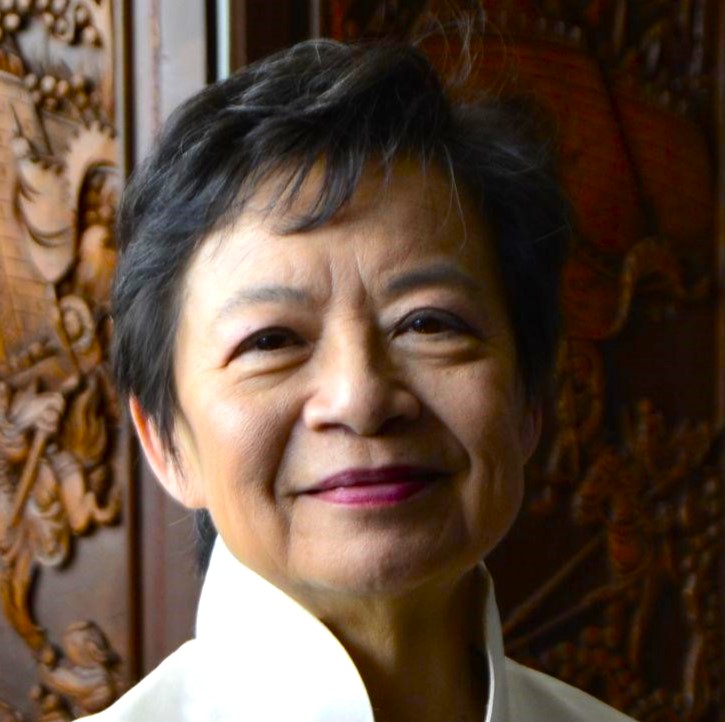
PhD
Dr. Li-Rong "Lilly" Cheng is the Director of the Chinese Cultural Center at San Diego State University. She served as Professor in the School of Speech, Language, and Hearing Sciences and Executive Director of Chinese Studies Institute at SDSU. Professor Cheng served as a member of the board of trustees of the Campanile Foundation of SDSU. She is the past chair of the Multicultural Issues Board for the American Speech, Language and Hearing Association (ASHA) and the chair of the Education Committee for the International Association of Logopedics and Phoniatrics (IALP). She is a Fellow of ASHA and received the Honors of ASHA. She served as the past president of IALP (International Association of Logopedics and Phoniatrics). She was the founder of the Asian Pacific Islander Caucus of ASHA.
Dr. Cheng served as the Chair of the Medical Assurance Board of the State of California and Board Member of the California Health Foundation. She served as the Chair of the International Affairs Board of the City of San Diego and the Chair of the Asian Pacific Historical Thematic District.
Professor Cheng was the past President of the Phi Beta Delta Chapter at SDSU. She has received many awards from SDSU and professional organizations. She was selected as the outstanding alumnus of Michigan State University. She is also a Fellow of the American Speech-Language Hearing Association (ASHA). Dr. Cheng is the recipient of the 1997 ASHA Award for special contributions to Multicultural Affairs and the recipient of the 2002 Diversity Award from the California Speech & Hearin… Read More
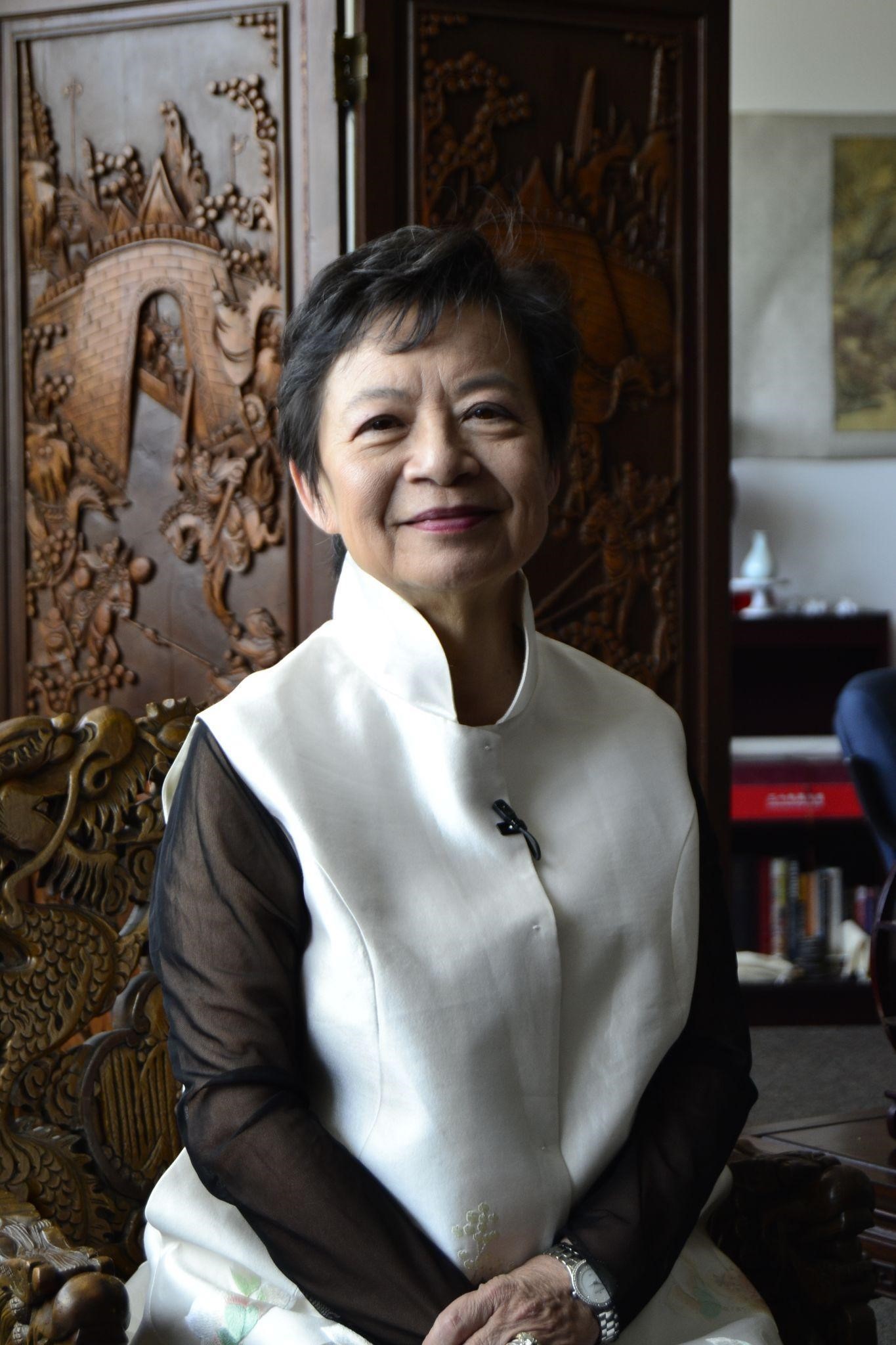
Dr.
Dr. Li-Rong Lilly Cheng is the Director of the Chinese Cultural Center at San Diego State University. She served as Professor in
the School of Speech, Language, and Hearing Sciences and Executive Director of Chinese Studies Institute at SDSU. Professor
Cheng served as a member of the board of trustees of the Campanile Foundation of SDSU. She is the past chair of the
Multicultural Issues Board for the American Speech, Language and Hearing Association (ASHA) and the past chair of the
Education Committee for the International Association of Communication Sciences and Disorders(International Association of
Logopedics and Phoniatrics (IALP). She is a Fellow of ASHA and received the Honors of ASHA. She served as the past
president of IALP. She was the founder of the Asian Pacific Islander Caucus of ASHA. She has dedicated her life to education
with a focus on the children, women,underserved and unserved. She has provided professional and humanitarian assistance
and resources to individuals, schools, clinics and groups with special needs including deafness, autism, speech and language
disorders and disability across the lifespan across the globe.
Dr. Cheng served as the Chair of the Medical Assurance Board of the State of California and Board Member of the California
Health Foundation. She served as the Chair of the International Affairs Board of the City of San Diego and the Chair of the
Asian Pacific Historical Thematic District. She serves on the Board of Jewish Family Service of San Diego and the Historical
Resource Board of the … Read More


