Let AI Do the Boring Work so SLPs Can Be More Human with Izzy Montano


 Apple Podcasts

 Spotify

 Overcast

 Castro

 PocketCasts

 RSS Feed
Today, James sits down with speech-language pathologist, Navy veteran, and entrepreneur Izzy Montano to talk about the possibilities and limitations of AI in the disability space. Izzy shares how his own frustrations with the repetitive tasks of clinical work led him to create SLPTools.ai, a collection of AI-powered tools designed to help SLPs spend less time on paperwork and more time connecting with the people they serve. He and James discuss where AI excels, why human judgment remains essential, and what entrepreneurs should keep in mind when using emerging technology to solve real-world problems. Izzy also shares lessons from his entrepreneurial journey, including the importance of developing new skills and having the tenacity to stick with an idea through the inevitable challenges along the way.
Contact Mai Ling: MLC at mailingchan.com
Contact James: James at slptransitions.com
XL_Let AI Do the Boring Work so SLPs Can Be More Human with Izzy Montano
===
[00:00:00] If you're a clinician, you've probably heard both sides of the AI story. It's going to save us from paperwork or it's coming for our jobs. I wanted to know what it can actually do for us today
It really isn't taking away jobs, it's actually adding a lot more jobs. There's more software developers, more jobs, uh, hiring for software developers. There's a lot more positions and things that people are doing. So truly, what artificial intelligence has done within the private sect is actually amplified people's work and not taken away people's work.
Welcome to the Exceptional Leaders Podcast. I'm Mai Ling Chan, and together with James Berges, we're getting you top tips and resources for building and scaling your disability-focused offerings straight from the forefront of disability advocacy and leadership
My guest, Izzy, Mr. Speechy Montano, is a former US Naval intelligence specialist who originally planned to become an ASL [00:01:00] interpreter. That interest in communication led him to speech language pathology, and he still has an active caseload of students while he's building AI SLP tools. You can find that at slptools.ai.
Great domain, by the way, Izzy. These are tools for speech pathologists to streamline SOAP notes, evals, treatment planning, scheduling, you know, all those nitty-gritty things that get you out of care, the things that, you know, you actually wanna do. So he built these tools for himself, and he tested them, you know, safely and compliantly, of course, on his own caseload to see what works and get feedback on what doesn't.
Outside of work, Izzy's a dad, and he's chasing the thousand-pound club in weightlifting. He looks forward to his wife Kaylee's homemade pizza every other week. I appreciate a man with clear priorities. We get into what AI can do with language samples, why a score that changes from one run to the next matters, and where clinicians still need their own judgment.
Spoiler alert, they still need it, and it's important. Izzy also gets honest [00:02:00] about building a business and why he's determined to stick with this one. Personally, I didn't become an SLP because I loved writing notes. If that's you, I wanna talk, 'cause that's interesting. But I loved helping people feel more confident communicating.
So Izzy's closing thoughts stayed with me. If AI gives us time back, could we use it to call a parent or connect more deeply with the person in front of us? Whether you're a clinician, advocate, or change-maker in the disability space, I think you're gonna get a lot out of this conversation. Here's Izzy
Today I am excited to be joined by Israel "Izzy" Montano. He's a speech-language pathologist, Navy veteran, founder at SLP AI Tools, help SLPs avoid burnout by automating some of the repeatable work we have to do that free us to do what we do best. And online, he's known as Mr. Speachy. I'm a little jealous.
Uh, I wanted to be Mr. Speechy, as we were saying before- ... we started recording, where it's rare to be a, a [00:03:00] male SLP, and so there can only be one Mr. Speechy. Although- Mm-hmm ... I don't know if you were ever in this group online called the League of Extraordinary Speech Gentlemen. I've heard of it. But shout out to Luke Stoiber, who started that, and he sort of showed me this world of SLPs and entrepreneurs and people in podcasting.
So you never know where it'll take you to be a male SLP or just an SLP in general. But- Truly ... you know, Izzy, you, you and I both went to SDSU, kind of overlapped. Yeah. Um, you were there for undergrad. I was there for grad school. Uh, and it, and it's really exciting to talk to you 'cause, yeah, we're kindred spirits.
You've created- Mm-hmm ... your own businesses. You still work with a large caseload. You're a dad- Yeah ... and you're running a company. Uh, we're gonna get into all that, but I wanna know, you know, for our listeners, you know, what was that impetus for being an entrepreneur in the first place? Like, for example, [00:04:00] I w- I, I remember in grad school looking at things and going, "Hey, this seems kind of repeatable," like these phonetic- Yeah
processes or language sampling techniques. If only there were a way to automate some of this. But I did not have the technical skills, so it was all a dream in my head. Yeah. So anyway, I'm glad I found you. Where how did you, how did you start figuring out, "Hey, maybe I do wanna automate it"? Was it like a-- did you always have that, or was it in school, one class?
Take me through it. It's funny because, um, my entrepreneurship journey really does begin when I was, like, a little kid. Like, I would, in elementary school, like third grade, I would go to my local Albertsons, go buy some, like, candy, bring it to school, and upsell it for, like, 50 cents more, and then just go ahead and repeat that process.
So it's like, ever since I was, like, a little kid, I- it's always been ingrained for me to kind of just wanna try to do something entrepreneurial. So in- when I was in grad school, I was always using the clickers, you know, for counting [00:05:00] how many times the, the student was using the S sound correctly. And then I had another clicker for incorrect, so it was really easy at the end of the day.
I'd just look at the two numbers, do a really quick calculation, and get my percentage. So it was in grad school when I first was experiencing that. I'm like, "It would be super sweet if I could just create this one simple digital dashboard that had percent correct on it." And that was one of the first tools that I actually made for SLP Tools, and first thing that I immediately thought of when I was in grad school.
Obviously, the documentation component You could have had some sort of, like, automation back then that was a little bit more static, but, um, it doesn't really take into consideration, um, you know, the flow, the video secrecies that we have with each report and with each session. So when AI came out and you could see the potential with that, then it was just like, "Okay, let's turn this on and, uh, let's try to create a soap note tool that can help me with my own [00:06:00] documentation."
'Cause, um, I hated, and I still hate to this day-- I don't know if how many EMRs you've used, but there's some that have, like, this, like, carry over button where you, you click it and it shows, like, the previous objective that you used or the previous objective that you used. And it's nice because it's like it kinda gives you the format that you created, and then you could just adjust it a little bit.
It's not as though you have to type in the whole thing all over again. Yeah. But I hated it so much because I, I really felt like the time constraint limited me from being able to write the note that I wanna write, and the minor adjustments that I'm making I feel like truly doesn't reflect what I wanna put in there.
And so it was just-- It was a really hard place for me to, one, try to prioritize. You're, you're right, I'm a husband and I'm a father. I have other things that I have to do, and then also I have my duties with paperwork. Mm. And then I also have my duties with, uh, the client that's right in front of me. And so it's just like being able to leverage artificial intelligence in this way with our [00:07:00] documentation soap notes, and there's tons of other tools in the platform as well.
But it, it's just, it just made the most sense for me, and so yeah. Sounds like it-- So it came from a natural, organic need from your own caseload. You're like, "I wish-" Mm-hmm. You know, you're solving your own pain point, which is a common theme for entrepreneurs and people on this podcast. It's like, "How can I scratch my own itch?"
But do you-- You didn't- Yeah ... really have that technical background. I know you-- It looks like, like you're looking-- When I look at your LinkedIn, you graduated sort of right into COVID, into the pandemic, right? Yeah. How much did that play a role in... 'Cause I remember there was just, like, this edtech boom, and I saw a lot of- Yeah
SLPs launching courses and products too, and there's, like, sort of this gold rush for people looking for tools to operate online and automate things. Yes. Yes, exactly. Uh-huh. Was that a big role in it? Oh, for sure. Yeah. It-- Again, it was like, um, it was in 2022, end of 2022, I finally got my C's, and I knew I wanted to start my own private [00:08:00] practice.
And I was learning how to do certain things with web development for my own personal website And then I started using AI to kind of teach me how to code certain things to add certain custom widgets within it. And then I began to think, "Well, maybe I could create my own Google extension for some, uh, SLP tools that I wanna make."
And then it was at that point I'm like, "Well, instead of building a Google extension, might as well just build my own basically website or web app at this point." And it was just around that time when AI really got revving and the coding basically became prompt-based. So as long as you're able to describe exactly how you want the platform to be, basically like vibe coding, but like pr- before vibe coding was actually a thing.
That's when it was like, "Oh, very cool. Now I'm really electrified, and I don't have to go through this three-hour process to kind of build this one little tinkering thing." It could just really electrify the building that I wanna do. Yeah. [00:09:00] So yeah, I came in right before that vibe code boom that happened, or the course boom during that time.
And since then it's just been ripping. It's amazing. I mean, it's like, um, there's, there's these moments in time, you know, there's like this... the web boom, the-- or the, you know, the dot-com bubble, which I was too-- I don't really remember that. Like, I don't know, I was pretty young, but I know it- At a-- There's always a hype cycle, and then there's like desperation and pleading and people with warnings and it happens- Yeah
with every new technology. Obviously, you're seeing it with AI now of like this, as we're recording, Anthropic researcher just came out. They're the ones who make Claude, which is a competitor to ChatGPT, um, saying that basically like Zoomer saying, you know, "This is gonna be the end of humanity if ChatGPT gets access to nuclear launch codes," da, da, da.
Like, and so there's always this hype and scared fear of every new [00:10:00] technology. Totally. I don't know. W- I wonder just like how do you feel about that? And especially you have a Navy intelligence background, which is so unique- Yeah ... let alone your SLP background. I don't know if that plays into it. No, for sure.
So on that Anthropic guy, right? To give a little bit of background on that guy, have you heard anything about him? Not really. I just saw the headlines, to be honest. Okay, so here's the thing, and this is super important. I actually, um, had a, a course that I did on propaganda within artificial intelligence, and you get it on both sides of the aisle, and this is one, I would say, very clear example of propaganda within artificial intelligence, and here's why.
The Anthropic guy who just came out and was, uh, dismissed or he left Anthropic under like him not really liking how they're conducting themselves because of AI safety, he only worked there for six weeks. At tops, he only worked there for three months. There's conflicting reports on that. So he was very new.
Mm. Additionally, his background behind getting into Anthropic, it wasn't as much of a techy [00:11:00] background that really warranted him knowing what is actually going on. And if you pay attention to his interviews, he's mainly talking about what he has heard from other developers who are developing the artificial intelligence, not anything that's coming from his own expertise.
On top of all of this, if you go to his original X post and his original X profile, he did not have many followers at all, and he didn't have the connections that he was apparently having on that, on that particular post during that time. So i- imagine somebody who has less than 1,000 followers on X, posts something and it has the second-most amount of views and impressions on the entire platform, second to Elon Musk.
On top of all that, within the first couple of m- I think 15 to 30 minutes, you had a couple of, uh, agencies that are more doomer around AI, a little bit more negative around AI, liking, sharing, [00:12:00] reposting it, as well as some, uh, more influential people, who I won't say right now, but more influential people within the world finding this post and reposting it.
Um, and so there's a lot of weird algorithmic things that were happening and a lot of different things that are circling around this guy that definitely puts a question mark around his overall ambitions and reasons and even those people that are right behind him, uh, potentially amplifying what he is saying And I mean, obviously, as you can probably see in here, I'm not an AI doomer.
Um, one of the things that in, in my circles that I run in, you know, you have these guys, these centimillionaire, billionaire, decamillionaire individuals who are invested into artificial intelligence, and these guys want artificial intelligence to thrive. But what they're realizing is that artificial intelligence isn't really that great.
It's not that good. It's amazing, it's magical in many different respects, but it... We've so [00:13:00] anthropomorphized- Mm-hmm ... meaning we've so put many different human, uh, attributes onto it, that when it actually doesn't perform in the way that we would like it to, we end up feeling a little bit like, "Oh, man, it's maybe isn't as good as it's meant to be or as it's cut out to be."
And what they've all realized is that, yes, it's, it's a very good narrow tool to use, but it's costly. It really isn't taking away jobs. It's actually adding a lot more jobs. There's more software developers, more jobs, uh, hiring for software developers. There's a lot more positions and things that people are doing.
So truly, what artificial intelligence has done within the private sect is actually amplified people's work and not taken away people's work, and grown companies to the point where they can hire more people to do more things because they now can do an exponential amount more things due to AI. Mm. So yeah, I w- I could wax on this a little bit more, [00:14:00] but, uh, I'll just, I'll stop right there.
No, I appreciate your insight and that perspective 'cause it's easy to take the binary or even the negative approach. I think it's easier, it's more popular, I feel like, in at least what I see. Yeah, me too. You seem to be in these circles more than I am. From my perspective, it's just like, well, whether or not it's super positive or, or negative, I can't control that.
But the, the bottom line is the cat is out of the bag, AI is here, so I'd rather learn how to use it to make my life easier and help people than to be online in forums shouting into the void. So that's just my two cents. Yeah. Um, but you're welcome to do that, but that's just what I'd rather- Yeah ... focus on.
But I do wanna bring it back to, like, the SLP AI tools function of it. Um, I have kind of a couple quest- a few, few questions, but one is like, where are we in that technology curve of SLP tools? [00:15:00] What can AI do well for SLPs, and what can't it do? Like, can it do fluency detection? How accurate is it? Can it do MLU and language sample analysis?
Or where, where are the things you wish it could do? Yeah. No, honestly, that's exactly what I was gonna talk about within the platform. It's the language sample analysis tool within it Because I've had it to where the tool was all artificial intelligence. I had three different basically functions going on to be able to cr- compute and get all these different metrics going on, all using artificial intelligence, of course within a HIPAA-compliant way.
And then what I've found is that artificial intelligence is just like us insofar as we aren't going to give the same answer every single time. Like, if you asked this question of me five months ago, I probably wouldn't give the same answer that I'm giving right now. Um, if you ask me the same question in about an hour, I might be angling it a little bit different as compared to [00:16:00] right now.
And the same is true for artificial intelligence and especially with whatever it's analyzing. And so when we're talking about, um, using artificial intelligence, it's really important to know that it's going to be variable. Know that there's some things and metrics that you could kind of do to fine-tune it so it's not as variable.
It's always going to be variable. And so with things like language sample analysis, it's not helpful to have something that is going to be variable. Rather, you need something to be as deterministic, i.e. code being able to collect certain pieces of information and to calculate it rather than relying on artificial intelligence to calculate it for you.
So within the system, an AI does, uh, detect and it's thriving in its ability to figure out different C units, clausal units, and being able to detect certain grammatical things that a deterministic code really wouldn't be able to pick up. But when it's then time to start to calculate and to count the different morphemes, different words, the number of different words, [00:17:00] um, the developmental sentence, uh, scoring for all of it, then it's really helpful to be able to bring in deterministic code in there to help refine it and tune it.
Mm. And I don't foresee artificial intelligence being so good that an SLP will ever be, like, excluded out. Artificial intelligence, like I said, is built upon data sets that we have provided, and oh, by the way, those data sets are from fallible humans. Mm-hmm. And so what would we expect from our artificial intelligence outside of fallible outputs?
Like, we should expect that, and we should expect to s- not suppress our reasoning but to make sure that we're keeping it engaged on during those outputs that it provides So I, I really don't foresee AI getting to a point of truly replacing us. And to even bring this closer to home even with you, you know the type of AI tools that are out there for marketing.
Mm-hmm. You know what type of, uh, what kind of outputs AI gives for copyright. Right. And [00:18:00] you understand, as, I think as well as I do, is that it's like it, it gets you started, it's actually decent, but it's not the end-all be-all. Yeah. Like, the, the images that it can create, the videos that it can create, the type of writing style that it can create, it, it's really not all that great.
Nevertheless, it's better than what we had, whatever, five years ago, 10 years ago, but it still doesn't replace that nice human touch that we see within ads or within any type of marketing things that are going on. Does that make sense? Yeah. Are you looking to go beyond your degree and expand your impact?
Whether you're a clinician or educator, you can leverage your skills outside direct services. Maybe you wanna break into the exciting world of health and ed tech, or maybe you're interested in carving your own path in digital entrepreneurship. Either way, you'll find a supportive community and resources at slptransitions.com.
Inside, you'll find my personal tips for mastering your mindset in the face of transition, trust me, I've been there, and inspiring stories of people who've made the leap. [00:19:00] You'd be surprised how much your experience translates to other fields. To find out how, join other movers and shakers at slptransitions.com.
Now let's get back to the amazing interview It's interesting. Yeah, there's so much there. I mean, it's moving faster and it's getting better and better, right? But it's even interesting how it influences us to change our writing. Like, I used to love em dashes, Izzy. Now I can't use- Oh, yes ... now it's an AI tell.
Or if not, then that step statement. Yeah. It's like, "You're not broken, you're just a down and out, but you're making progress.So all these little- Yeah ... constructions that are actually decent on their own- Yeah ... but when you see them all over the place, it gets a wash. So it'll be interesting to see how people adapt to that.
Yep. And then with communication disorders, you have all this variability, and you have the personality of the student or the patient in front of you. You have their interests and everything, and I know there's more [00:20:00] AI besides you. There's just, like, even-- I don't know, I've heard whispers of other c- like, venture capital coming in and doing roll-ups and, oh, there's a lot of fear in the SLP community and the disability community.
Um, a lot of that is politics and programs being cut, so it's understandable, and that's real. But how can we work smarter and not harder so we can focus on the human aspects and connect? Yeah. Like, that was my favorite part of, of clinical work, is connecting with the person in front of me and figuring out how to inspire them to communicate.
'Cause at the end of the day, it's like, I actually maybe wasn't the best at the little nitty-gritty note-taking. It's fine. Yeah. But I wanted- Right ... I wanted to get people to feel confident, and I don't know if AI can inspire people to feel confident in their communication and expressive. But maybe I'll look back on this and we'll say, "Wow, I'm pretty done."
I mean, that AI can do everything. It, it-- 'cause, you know, they have, like, therapists that are, [00:21:00] um, AI therapists they're working on that have a face that looks like a child. Yes. So the child is more likely to open up to another child, so. Oh, no way. Really? That's creepy. It's like- Oh, man ... yeah, yeah. And then they- Oh
can, like, look at your m- micro movements that humans can't even detect, so it can see how you really feel. Ugh. The thing is, man, and here's the thing, and this is, this is what happens through every single-- like, what you were talking about with technological booms, right? The coolest thing out of all of this is that the human touch is gonna be that much more valuable and treasured when we get so bombarded and swamped with the amount of artificial intelligence usage that is out there.
And so for me, when I hear about, you know, another child right in front of a screen and they feel a little bit more comfortable, you know, opening up because, you know, they're seeing a- another, a kid there, I can't help but think that [00:22:00] that may happen, but the swing and the pendulum from that going to the opposite side of saying, "That will never...
We have to actually have a real human right there because of certain elicitations or whatever, whatnot." Like, there's always a pendulum swing. Yeah. And so, like, with this AI boom, there's a pendulum swing, but then there's always a pendulum swing back. For me, what I foresee in this pendulum swing is it's gonna swing back to where handcrafted human things are gonna be just valued.
And so having an SLP that can actually really enthusiastically engage and interact with a child as compared to a robot that has all these blinking lights and is able to do all these fancy different things to keep their attention there and then also to keep them entertained. But if you're, if you're a human that can do that, then dang, like you're gonna be highly valued.
So it's, um, no, that, that makes me super eager- Mm ... to be honest, is that. But [00:23:00] you said something with, um, SLPs and disability advocates and all these different demographics having a little bit more of a concern. What did you mean by that? Could you unpack that a little bit more? I think I, you know, I'm going off of mostly internet world, so that's a self-selecting sample.
Yeah. Part of it is I'm helping SLPs figure out what they can do either in clinical work or outside of it, and so you're a perfect example of that. But I think a lot I see on this SLP Transitions Facebook groups and Reddit is like, oh, there's federal cuts to disability acts and funding, and so there's just like more focus on SLPAs re- 'cause they're easy to reimburse than SLPs.
Ah. So not that the jobs are going away per se, but my understanding is that there will be more focus on SLPAs, you know, SLP assistants taking a lot of the clinical caseload and SLP is sort of like a more background diagnostic role perhaps. Okay. I mean, time will tell. Um, and I'm curious what you think, 'cause you're like [00:24:00] more st- still in clinical world.
Do you hear more worries than before or is it kind of the same as it's always been? To me, man, I, it sounds, at least where I'm at, it feels the same and it is the same. I actually have an SLPA that I work with, and she's great. The thing is, is that when our profession started introducing SLPAs, I felt like that was like kind of the expected trajectory where we would be more of the managerial aspect of it and then our SLPAs, you know, get to do the treatment aspect of it.
And so for me, it's kind of like, uh, I could foresee and maybe deduce certain implications that come from that- Mm ... where maybe you have one SLP who manages five SLPAs, but then those five SLPAs, you know, could have been three different SLPs rather than one SLP and five of s- I mean, I could foresee how maybe that could be like a little bit worrisome for SLPs.
But- Yeah ... I mean, our profession, I think, is one of the hottest ones [00:25:00] in the United States, and especially because of the amount of screen time. Mm-hmm. You know, the, the TV ba- being a babysitter for parents and the amount of speech-language delays that we're seeing Our job security is high. Like, we will always be in need of speech language pathologists.
Unless you live in a very dense area with a bunch of SLPs, I don't foresee job security or even having a position open for us being an issue. Yeah. I, I agree. I still get recruiters all the time. It's, uh, you know, texting. Yeah. So there's no-- It doesn't seem like there's a real shortage, but maybe, like, some of our audience may be an SLP, they might be another clinician or advocate, and they're thinking, "I like some aspects of clinical work.
I might be a little burnt out," or, "I'm just curious about entrepreneurias-ism." Is that a word? Entrepreneurialism? Being an entrepreneur. There it is. Yeah. Put that on a language sample. Yeah. Like, I, I would love to know, [00:26:00] one, maybe, like, if you have general advice for someone who's thinking, "Where do I start if I feel pigeonholed as just a clinician?"
Or maybe, maybe it's even more grounding to explain, like, how did you start testing things with a-actual SLPs? 'Cause you tested some- the soap notes with yourself, right? Yeah. But I think it's a scarier thing to put a product in front of your peers and say, "I made this thing." Yeah, no, there's so much to that.
Gosh. The biggest thing is that, like, I know that not everybody is entrepreneurial, so I wouldn't even, like, advocate for everybody to do their own thing because it's, it's no joke. It's not easy. It's only easy for everybody else, but it's never gonna be easy for you. Mm-hmm. And it's always gonna be tough, and you're always gonna be hit with roadblocks, and you gotta just be tenacious enough to stick with it.
So if you don't have that, that drive already and you're just kind of dabbling, it's just not gonna work. Like, you gotta really [00:27:00] want it- Um, and you've really got to understand that this is a, uh, probably a seven-year journey of learning all these different skills, because it's... When you become an entrepreneur, you're saying, "I'm gonna put on the hat of a CFO, a chief financial officer.
I'm gonna put on the hat of a CMO, a chief marketing officer. I'm gonna put on the hat of a COO, a chief operating officer, and I'm gonna have to learn all these different as- CS..." So I mean, there's so many different things, uh, when you put on this entrepreneurial hat that is, uh, required of you, especially if you're gonna be bootstrapping it, funding it all yourself.
You're just gonna, you're gonna go through, uh, a lot of hard times. You know, one of the things that I had growing up was, like I said, I was very entrepreneurial, but I never saw this frequent pattern that I had of doing something and then quitting, or doing something and then giving up. It wasn't until I got older did I actually look back and I'm [00:28:00] like, "Holy cow," like, "I'm a quitter."
Like, I don't, I don't finish things, or I, I'm not... I back out right when it got to this one little part that was hard and I just said no. And it was like, darn, like, I wish I would, I wish I would've persevered in that moment. I wish I would've pushed in that moment, and where would I be if I pushed in that moment?
And it really... And you can hear it in my voice, like, I'm, I'm frustrated with that. Mm. And so it's that type of learning experience that I've had that has informed- Yeah ... my entrepreneurial pursuit now in this very moment with SLP AI Tools to, like, I'm white-knuckling it all the way through. Like, I'm not letting this thing go.
I'm making sure that I am fully charged, fully powered in every single way for me to make sure that this thing is gonna thrive. And by golly, it will thrive, and it will su- succeed. And it is succeeding, which is great. Yeah. But it's just a matter of keeping that same tenacious attitude all the way through So for me, it's [00:29:00] the entrepreneurial journey is one of the best ones to go through if you're looking for personal growth and personal development.
Yeah, I mean, James, I'm preaching to the choir to you because I know you're doing the same thing, and it's just like, it's, uh, it's one of those things that I would even just add one more practical thing. There's a guy that I followed a long time ago, and I still follow today. His name is Alex Hormozi. He's on YouTube.
He does a lot of business content, very practical, tangible things. You know, his, his personality might rub a couple of people the wrong way, but you'll definitely be appreciative of the substance that he brings and the clarity that he brings to, to business. So I would highly recommend to follow his content or follow somebody else who really speaks the type of language that, you know, you, you can resonate with and you get really good substance from.
But I definitely would recommend him too. Nice. Alex Hormozi, yeah. Yeah. I think, um, yeah, you got me fired up. It's like, it's funny, I thought you were gonna say there's value in quitting, and I think there-- [00:30:00] because personally, I think there's a balance, right? Like, I feel the same way of, man, I wish I had stuck with like drum lessons.
I took a couple of them, and I was like, "This is hard," and I put it down. Wrestling team, like one year and then stopped. But there wasn't that much discipline and structure. But as adults, we get to make these choices of what really matters to us. Yeah, so it's funny that you had a chip on your shoulder, and it sounded like you had something to prove to yourself a little bit of like, "I'm gonna stick with it."
But it also has to be something you actually are passionate about and care about- Absolutely ... um, not something just put on you. So find that thing. A-and you're doing it alongside while still doing SLP work. Is there ever gonna be a point when you, like, if the company keeps growing, you, that you're gonna stop doing clinical work?
How do you think about that? Yeah, I always wanna do clinical work. I don't foresee that happening. Like, I thought about that a lot and I'm like, part of the, the magic behind the platform is that you could really taste and see like, this was made by an SLP. Mm-hmm. [00:31:00] Like you, you feel it, like you could see it, and it's because I live the workflows right now.
I'm in high school, and then I'm also in a developmental preschool, like I'm right in between. And so like, I don't foresee myself ever stopping in so far as I'm always, uh, you know, an SLP, like, and having this platform because of that, you know, that taste that I can bring to the platform. It's kind of weird using that word taste.
I've never used that before or talking about it, but the style, the how it's formatted, all that stuff. Taste is rare in the world of AI. That's what helps you stand out now, is having a point of view and taste. Honestly. Yeah. Yeah. And so for me it's, um, I-- yeah, one of my biggest goals with this is for me to be able to provide a, a pathway for homeschooling parents who can't afford speech therapy services- To be able to get speech therapy services at a very reduced cost funded by SLP AI tools, so that [00:32:00] I can actually hire some SLPs to do the work for these homeschooling parents, and that basically that funding is coming from the company.
Wow. So, like, that's a, that's a very big goal of mine in the future, but that is certainly something that, again, I'm still gonna be linked in with clinical work. But I would hire out for, like, other things that I'm eventually gonna have to take off and give to somebody else. Yeah. Eventually. You c- Oh, unless you make AI- Eventually
AI agents that can do it all. We'll see in a couple of years what happens. Right. That's, that's amazing. Right. Well, Izzy, uh, I- I- I've t- taken a lot of your time. I really appreciate you sharing your story. Any last words that you would put on a billboard for people, and where can people find you? Yeah, yeah.
I mean, uh, you can find me on Instagram, LinkedIn, and I'm on TikTok, but it's not, like, me, it's the SLP Tools platform. Uh, you can follow there. But, I mean, the biggest thing that I would wanna leave behind is artificial intelligence, and I think I was kind of [00:33:00] referencing this earlier, is truly meant for us to be more human, for us to get back to do more human things because I would argue that artificial intelligence is going to...
I- is presently taking those mundane things so that we can go back to the more human things and for us to lean into that rather than leaning into another technology. So we have, uh, I have a ton more time 'cause of all the paperwork that is done for me, so why not take the time to actually give a phone call to a parent?
Why not take the time to actually write a note to somebody? Why not take the time to actually do something that's more human to human face-to-face? And so rather than us becoming more isolated and in our silos, but becoming more integrated, that would be my biggest thing to leave off with. Lovely. Let's become more human- Yeah
and let the, let AI take care of the other stuff so we can reconnect- [00:34:00] That's right ... and frolic and express ourselves and communicate. Frolic. I like it. Yeah. I, I... You didn't say that, but I'm saying it. We gotta frolic. Uh-huh. Awesome. Yeah. Well, thank you, Izzy. I appreciate your time. For sure. We hope you enjoyed this episode and invite you to leave us a review on Apple Podcasts and Spotify and share the show with people you think will find value from it.
This helps the show a lot. Or have a great guest referral? Reach out to us at xleaders@gmail.com. And if you want exclusive tips on becoming an exceptional leader delivered straight to your inbox, just go to exceptionalleaders.com and sign up for our mailing list. Thanks for listening.
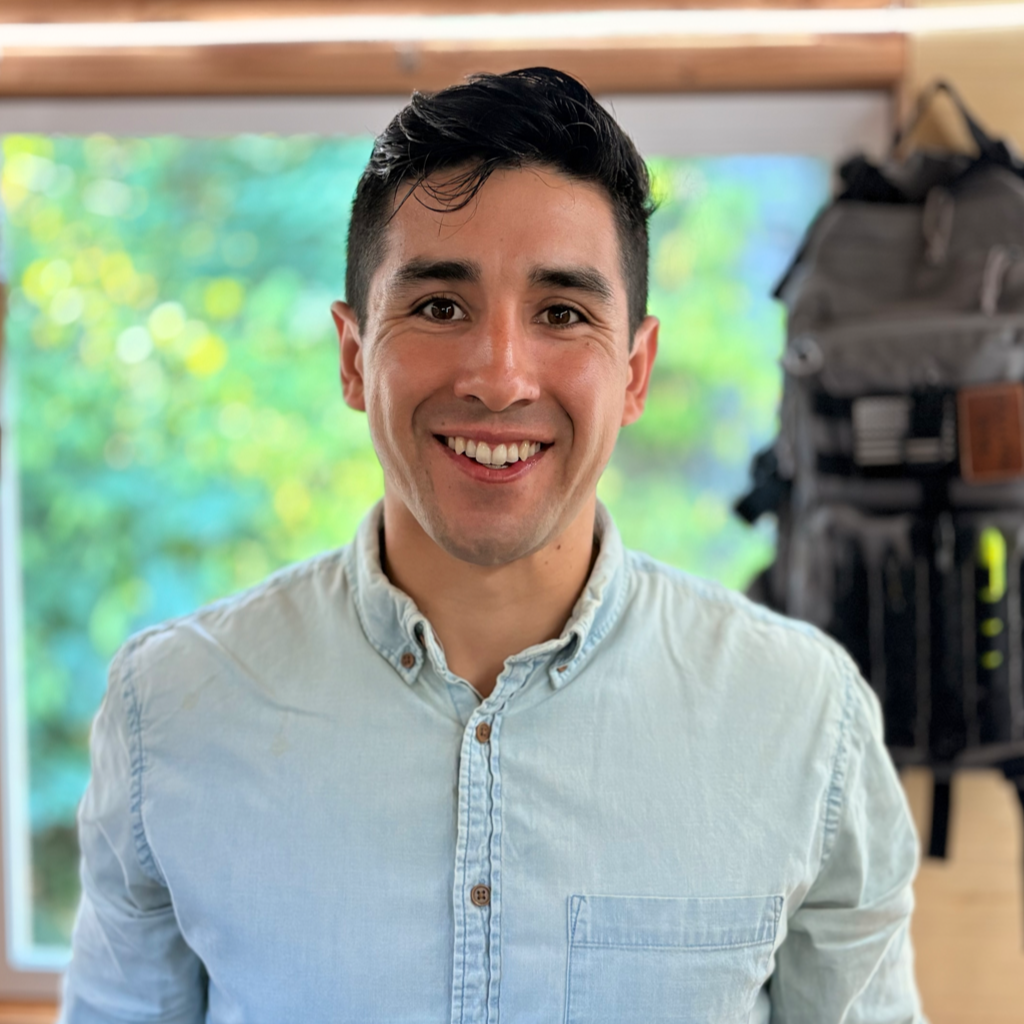
Founder of SLP Tools.ai
Izzy, aka Mr. Speechy, is a former U.S. Naval Intelligence specialist who served in San Diego, Hawaii, and Australia, supporting PACOM's objectives between 2015-2022. He began his journey in communication through American Sign Language, originally intending to become an ASL interpreter; however, that passion eventually led him to speech-language pathology.
Now an independent contractor serving the Arlington School District, he works directly with students in both developmental preschool and high school. He’s also the founder of SLP Tools.ai blending his clinical experience with crafting SLP-first AI technology.
Outside of work, he is steadily working toward joining the 1,000-pound club in weightlifting. A milestone that has been over a year in the making.
And every two weeks, there’s one thing he always looks forward to: homemade pizza, made by his wife Kaylee.


